6 min read

Your skin cells take instructions. Build collagen here, close this wound, make new cells. Growth factors are the messengers that carry those instructions, and your skin sends fewer of them every decade. That decline is a large part of why skin gets thinner and slower to bounce back.

The short answer

Growth factors are signaling proteins that tell skin cells to produce collagen and repair themselves. Applied topically, they supplement the signaling that declines with age, and studies show improvements in fine lines, firmness and skin texture over about three months. They are gentle, they suit skin that cannot tolerate retinoids, and they are one of the best things to use after a treatment.

Suits All skin types, Mature, Sensitive, Dry, Normal
Read time 6 min
Diagram showing growth factor proteins fitting receptor notches on a skin cell like keys in locks, prompting the cell to make collagen.
Each growth factor fits a specific receptor like a key in a lock, and the cell changes what it is doing in response.

What it does

Growth factors are signaling proteins that tell skin cells to produce collagen and repair themselves. Applied topically, they supplement the signaling that declines with age, and studies show improvements in fine lines, firmness and skin texture over about three months. They are gentle, they suit skin that cannot tolerate retinoids, and they are one of the best things to use after a treatment.

What a growth factor is

A growth factor is a protein that carries a specific instruction from one cell to another.

It works like a key in a lock. Each growth factor fits a particular receptor on the surface of a cell, and when it docks there, the cell changes what it is doing. Divide. Make collagen. Build new blood vessels. Move across and close this wound.

Different growth factors carry different instructions. EGF, which stands for epidermal growth factor, tells surface cells to renew. TGF-beta is heavily involved in collagen production. VEGF works on the small blood vessels that feed your skin.

A serum usually contains several, because repair is a coordinated job rather than a single command.

Why this is different from most anti-aging ingredients

A retinoid works partly by irritating your skin into renewing faster. The irritation is not a side effect, it is part of the mechanism, which is why using one involves weeks of adjustment.

Growth factors ask your cells to do something instead of forcing them. Nothing is being provoked, which means there is nothing to build tolerance to and nothing to get through. That is the trade: more comfortable, and slower.

Getting a protein that size into your skin

It is a fair question, because growth factors are large molecules and your barrier is built to keep large molecules out.

This is the problem a good formula is designed to solve. Growth factors are commonly encapsulated in liposomes or similar carriers built to ferry a large protein through the surface, and research on these delivery systems shows they measurably improve how much gets in. A product that has invested in one will usually say so on the packaging.

Some of the effect also comes from signals passing onward. Growth factors acting on the upper layers prompt those cells to send their own messages deeper, because your skin cells pass instructions to each other in turn.

The microneedling exception

Growth factors work well alongside lasers and peels, and they are useful in the days after microneedling too. What we do not do is apply them immediately after a microneedling session.

Your skin is already flooding the area with its own growth factors at that point, which is precisely how microneedling works. Adding more achieves nothing. We wait about forty-eight hours, and from there a growth factor serum becomes part of supporting the healing.

Where growth factors come from

Your own cells make them. Fibroblasts, keratinocytes and others release growth factors constantly to coordinate repair and renewal.

The ones in skincare are grown rather than harvested. Cells are cultured in a lab and either the growth factors they release are collected, or the proteins are produced directly through recombinant technology, which means an identical copy made without needing the original cell.

On an ingredient list these appear as sh-Oligopeptide or sh-Polypeptide followed by a number, where the sh simply means it matches the human version. Some products use conditioned media instead, which is the whole fluid the cultured cells released. Both approaches work.

Diagram showing three growth factors and the different instruction each one carries: renew surface cells, make collagen, build blood vessels.
Different growth factors carry different instructions, which is why a serum usually contains several.

What to look for on a label

Human-derived and plant-derived are different ingredients

Nearly all the research behind growth factors was done with human ones, produced either by culturing human cells or by recombinant technology. On an ingredient list those appear as sh-Oligopeptide and sh-Polypeptide, where the sh simply means the protein matches the human version.

Plants have their own growth factors, and they are a different material sharing the same name. Human skin cells have no receptors built to read plant signals, and the evidence that plant-derived versions do anything comparable is thin at this stage.

What that means practically is to check which one you are buying, because the two are priced and marketed similarly. If the source is not named on the packaging, ask.

Ask how it gets into your skin

Getting a large protein through intact skin is the central problem with this ingredient, and how a product solves it is worth knowing before you buy.

You will not always find that on the packaging, and it is a fair thing to ask a brand directly. A company that has invested in the technology will be glad to tell you how theirs is designed to work.

Several beats one

Repair is a coordinated process, which means a serum with a blend of growth factors generally does more than one built around a single protein. Many good formulas also add peptides, which are smaller signaling fragments doing a related job, and antioxidants to protect the result.

Packaging is not a detail

Growth factors are proteins, and proteins are fragile. Heat, light and air degrade them, so airless pumps and opaque bottles are what you want. An open jar is the wrong format for this ingredient, and a bottle that has sat in a warm bathroom for a year will be doing less than it did.

Where it sits in your routine

Most growth factor products are serums, which go on after cleansing and before your moisturizer. If yours comes in a cream, that is your moisturizer step.

What works best with growth factors

Growth factors conflict with nothing. They pair particularly well with a retinoid, since one asks your cells to build while the other speeds up turnover, and plenty of people use growth factors in the morning and their retinoid at night.

Sunscreen every morning, reapplied through the day. There is little point asking your skin to build collagen while UV breaks it down faster than you can replace it.

Common questions

Growth factors or exosomes?

Cousins rather than rivals. A growth factor is a single signaling protein applied on its own. An exosome is a sealed package that carries many signals at once, growth factors among them, with a membrane that protects the cargo.

Growth factors have a much longer track record, more consistency from product to product, and clinical studies going back over twenty years. Exosomes carry a richer message and vary more between products. Both are good ingredients, and if you want the better established of the two, this is it.

Growth factors or retinoids?

Retinoids have more evidence behind them and remain the stronger single choice for anyone who tolerates one. Growth factors are the more comfortable option and work by a completely different route, which makes them an excellent alternative if retinoids have not suited you, and a good partner if they have.

When do I use them around a treatment?

With lasers and peels, use them through the healing period as your provider advises.

With microneedling, wait about forty-eight hours before going back to your growth factor serum. Your skin is producing plenty of its own in the immediate aftermath, so there is nothing to add until that settles. If you are a client at our New York City LAZ Clinic, ask us and we will tell you exactly when to start.

How soon will I see something?

Twelve weeks. This works on collagen, and collagen does not hurry. Most of the studies measured at three months, and skin texture tends to improve before firmness does.

Growth factors do not come with the signs you might associate with an active ingredient working, the way a retinoid brings peeling. The work happens quietly, which is why the photographs matter.

Can they make anything grow that should not?

This question comes up because growth factors are involved in cell division, and it is a fair thing to wonder.

The reassuring part is that topical growth factors act on the upper layers of skin, and they are proteins that break down rather than accumulate. There is no evidence linking topical growth factor products to any such risk. If you have a personal or family history that makes you cautious, that is a conversation worth having with your doctor.

Can I use them in pregnancy?

Skincare ingredients are almost never tested on pregnant people, for obvious ethical reasons, so a definitive answer does not exist for growth factors or for most things. What we can tell you is that plenty of people carry on using them through pregnancy without concern. Ask your OB or midwife and go with what they say.

Are they vegan?

Recombinant growth factors are produced without animals, though they are copies of human proteins, so whether that meets your definition is a personal call. Products using cultured human cells are similar. Worth checking the specific product if it matters to you.

Timeline showing a forty-eight hour wait after microneedling before resuming a growth factor serum, because your skin floods the area with its own.
Your skin is already flooding the area with its own growth factors. Adding more achieves nothing until that settles.

How to use it

  • Once or twice daily on clean skin. Most growth factor products are serums, which go on before your moisturizer. If yours is a cream, it takes the place of your usual one.
  • No building up needed. There is no tolerance to develop and no irritation phase to get through, so you can use it daily from the start.
  • If you use a retinoid, growth factors in the morning and the retinoid at night is a comfortable arrangement.
  • Around lasers and peels, use them through the healing period as your provider advises.
  • After microneedling, wait about forty-eight hours before restarting. Your skin is producing plenty of its own in that window.
  • Follow the storage directions on your packaging. These are proteins, and heat and air degrade them, so most need keeping somewhere cool and dark with the bottle closed.
  • Broad spectrum SPF 30 or higher every morning, reapplied through the day.
  • Photograph your skin on day one and every four weeks, in natural daylight from the same spot, and give it twelve weeks.
Evidence and sources

A note on the evidence. Growth factors have a longer research history than most of the newer actives, with clinical studies going back over two decades and consistent findings on fine lines, texture and firmness across about three months of use. The biology is not in question either, since their role in wound healing is thoroughly established. Two honest limitations remain. Many of the studies are small and some are funded by the companies selling the products, and the question of how much of a large protein actually penetrates intact skin has never been fully resolved, which is part of why the results after a treatment are clearer than the results without one.

Last reviewed

Products with Growth Factors

  • Plated

    Calm Serum

    5.0 out of 5.0 stars

    $258.00

  • Lumisque

    CO2Lift Carboxy Mousse Moisturizer

    4.8 out of 5.0 stars

    Sale price $225.00 Regular price $249.00

  • Plated

    Daily Serum

    4.9 out of 5.0 stars

    From $244.00

  • Calecim

    Eye Contour Lifting Cream

    5.0 out of 5.0 stars

    $160.00

  • Vivant

    $294.00

  • Calecim

    Hair Serum

    4.9 out of 5.0 stars

    $360.00

  • Plated

    Intense Serum

    4.9 out of 5.0 stars

    From $244.00

  • Calecim

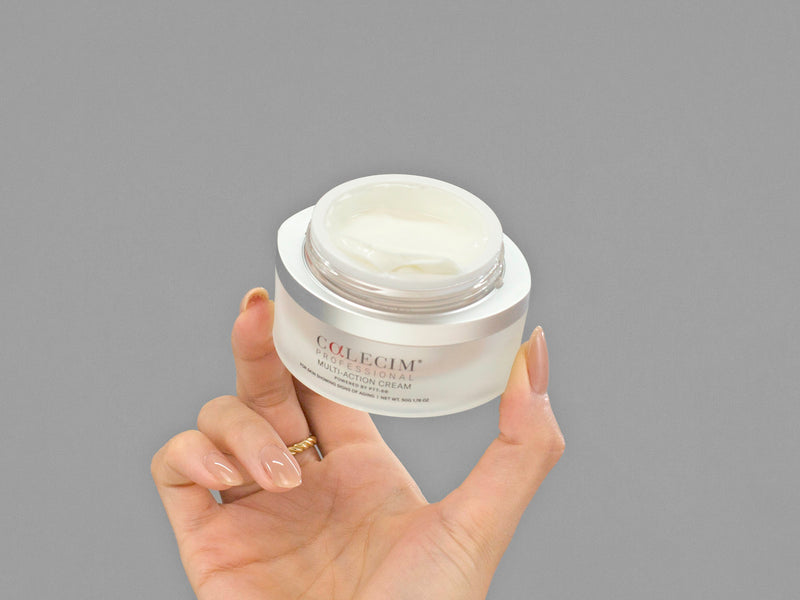
    Multi-Action Cream

    5.0 out of 5.0 stars

    $200.00

  • Pavise

    Precision Eye Lift

    4.7 out of 5.0 stars

    $128.00

  • Calecim

    Professional Pigment Solution

    5.0 out of 5.0 stars

    $148.00

  • Calecim

    Professional Serum

    4.8 out of 5.0 stars

    $100.00

  • Calecim

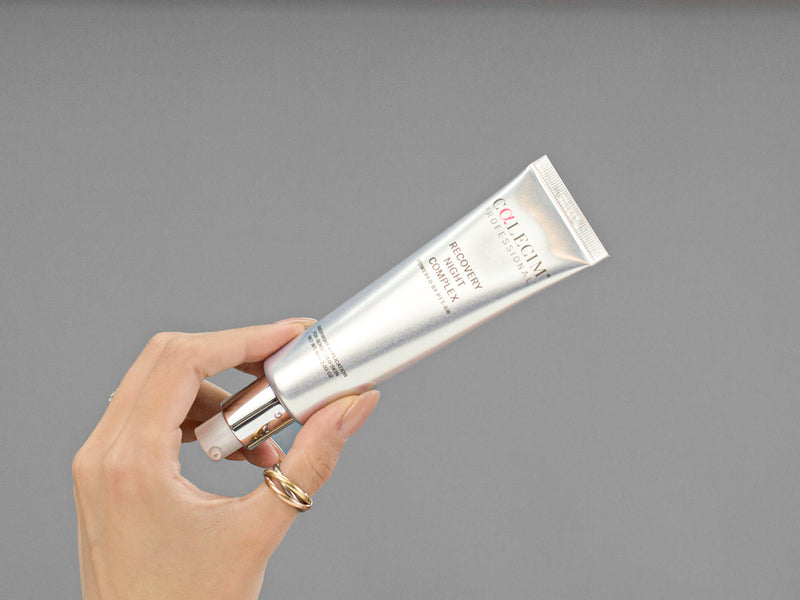
    Recovery Night Complex

    5.0 out of 5.0 stars

    $115.00

  • Marini SkinSolutions

    $248.00

  • Hydrinity

    Restorative HA+ Mask

    4.4 out of 5.0 stars

    $120.00

More Ingredient Guides

View all

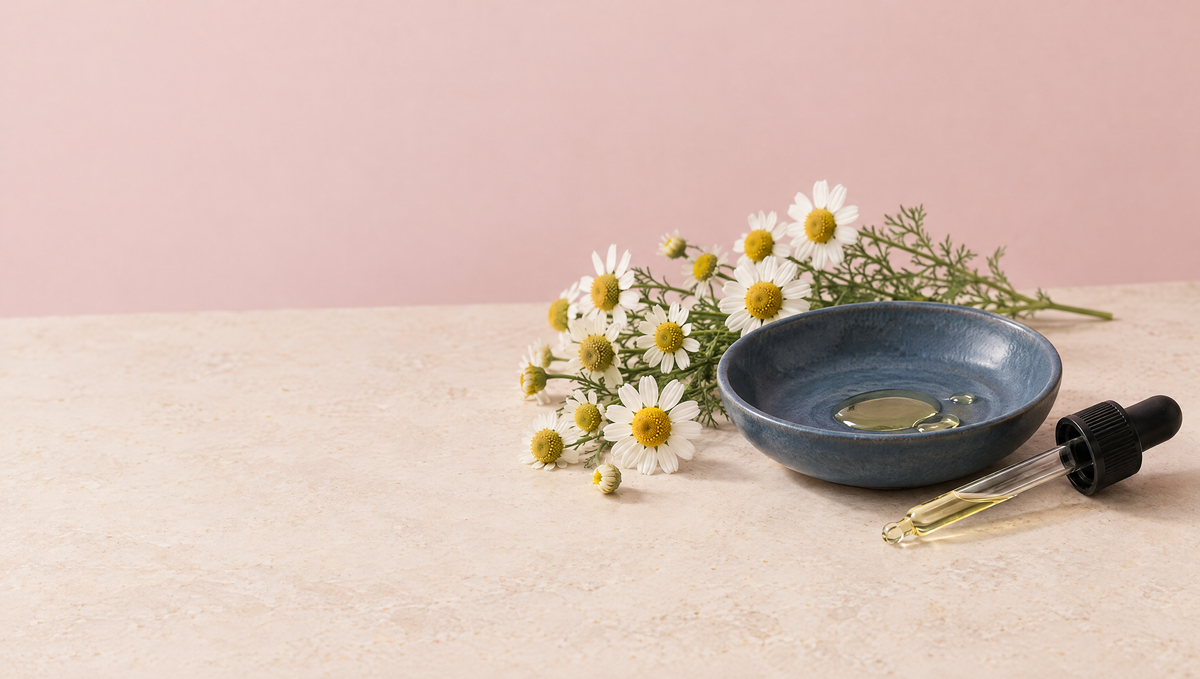
German chamomile flowers beside a slate blue dish holding drops of clear, pale golden oil on a warm stone surface.

Bisabolol for Calming Redness and Irritation

Bisabolol is the calming compound first found in chamomile, and it quiets the inflammation behind redness, stinging and itch. Here is how it works, who it suits and how to use it.
Read moreabout Bisabolol for Calming Redness and Irritation

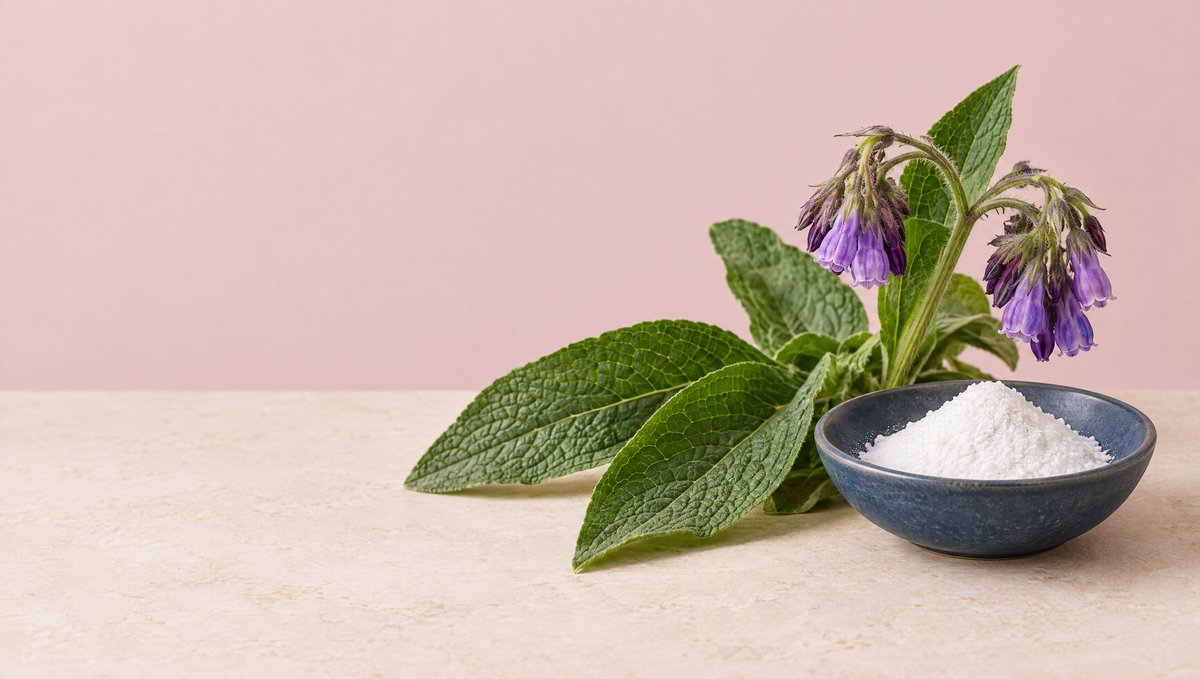
Fresh comfrey leaves and purple flowers beside a slate blue dish of fine white allantoin powder on a warm stone surface.

Allantoin for Rough, Dry and Irritated Skin

Allantoin softens rough, flaky skin and soothes irritation, and the US FDA recognizes it as a skin protectant. Here is how it works, what the research shows and how to use it.

Read moreabout Allantoin for Rough, Dry and Irritated Skin

Fresh centella sprigs with small round scalloped leaves on a warm stone surface beside a slate blue ceramic dish, against a soft blush backdrop.

Centella for Redness and Reactive Skin

Centella calms inflammation, helps skin hold on to water and supports repair after irritation. Here is what the research shows, what cica means on a label and how to use it.

Read moreabout Centella for Redness and Reactive Skin