5 min read

Your immune system already makes hypochlorous acid. White blood cells produce it to kill bacteria at the site of a wound, and it does that without harming the tissue around it. In a bottle it is a mist that calms angry skin and stings absolutely nothing.

The short answer

Hypochlorous acid reduces the bacteria on your skin and calms inflammation, and it does both without stinging or drying. It is gentle enough for skin that is already upset, and one of the most useful things to have on hand after extractions. Use it when your skin needs it rather than every day, because it reduces every kind of bacteria on your skin at once, and your skin relies on that population staying in balance.

Suits All skin types, Sensitive, Acne-prone, Rosacea-prone, Oily, Combination
Read time 5 min
Diagram of skin surface showing mostly helpful bacteria alongside a few acne-causing ones, with mist descending and clearing both kinds.
Hypochlorous acid cannot tell one bacterium from another, which is why it works and why it should be used sparingly.

What it does

Hypochlorous acid reduces the bacteria on your skin and calms inflammation, and it does both without stinging or drying. It is gentle enough for skin that is already upset, and one of the most useful things to have on hand after extractions. Use it when your skin needs it rather than every day, because it reduces every kind of bacteria on your skin at once, and your skin relies on that population staying in balance.

Where hypochlorous acid comes from

Your own white blood cells make it. When something breaches your skin, they produce hypochlorous acid as part of the immune response, using it to reduce bacteria while leaving your own tissue intact.

That is the whole reason it is such a well tolerated ingredient. Your body has been using it on you your entire life.

The version in a bottle is made by passing an electrical current through salt water. It has been used in wound care and in hospitals for a long time, and skincare arrived at it late.

One point worth making early, because the names cause a lot of unnecessary worry. This is not bleach. Household bleach is sodium hypochlorite, a different and far more aggressive compound. The names are close and the chemistry is related, and hypochlorous acid at skincare concentrations is gentle enough for eyelids and open wounds.

How it works

Hypochlorous acid breaks down bacteria physically rather than chemically. It passes through their cell walls and disables the proteins inside, which happens in seconds and which bacteria have no real way of adapting to. That is why, like benzoyl peroxide, it does not lose effectiveness over years of use.

Your own cells are unaffected because they are larger, structured differently, and equipped to handle a molecule your immune system produces on purpose. Bacteria are simply more fragile.

The second half of what it does is calm inflammation, and it is the part we value most. Hypochlorous acid quiets the signaling that keeps skin red and reactive, which is why it takes the heat out of an angry face rather than only cleaning it. Redness settles within minutes and skin feels less irritated straight away.

Why you should use it sparingly

Here is the part a lot of sources online get wrong, and it is the reason we do not tell people to mist all day.

Your skin carries a large population of bacteria. They are not divided into good ones and bad ones, and each type has its own role. What matters is the balance between them. That balance is part of how your skin holds its slightly acidic surface, keeps any one type from taking over, and manages its own inflammation.

Hypochlorous acid reduces all of them without distinguishing between types. Occasionally that is fine, and your skin repopulates. Repeatedly, it keeps your skin from settling back into balance, which can leave it prone to dermatitis and can make eczema worse.

So use it when your skin needs it rather than as an all-day habit.

How we use it in the clinic

We use it before or after extractions, particularly when there have been a lot of them, and it is a good thing to go home with after a peel or a laser.

We do not use it after microneedling, even though you will see that recommended constantly online. Microneedling works by creating a controlled inflammatory response, and that response is the treatment. Suppressing it works against what you just paid for. Your skin also produces its own hypochlorous acid afterwards, so adding more achieves nothing.

Diagram comparing fragile bacteria breaking apart with a larger, more structured skin cell left unaffected.
Your own cells are larger, structured differently, and equipped to handle a molecule your immune system makes on purpose.

What to look for on a label

Stability is the whole game

Hypochlorous acid is unstable. Light, heat and time turn it into salt water, and a bottle that has been sitting in a warm room for a year may be doing very little. This is the main thing separating a product that works from one that does not.

Look for opaque or dark packaging, a stated expiry or manufacture date, and a brand that tells you how long it lasts once opened. Most are best used within a few months of opening.

Every product keeps better somewhere cool and dark rather than on a sunny windowsill, and with this one it decides whether you are using an active product or salt water.

A short ingredient list is a good sign

The best of these products contain very little: water, salt, hypochlorous acid, and often nothing else. That is not a formula cutting corners, it is a formula built around an ingredient that does not tolerate much company.

If you see a long list of other actives alongside it, it is worth asking the brand how much hypochlorous acid is still active in there by the time it reaches you.

What works best with hypochlorous acid

Benzoyl peroxide is the pairing that makes sense. The two reduce acne bacteria by different routes, and hypochlorous acid takes some of the redness out of the process.

Keep it apart from prebiotic and probiotic skincare. Those products work by supporting the bacteria on your skin, and hypochlorous acid reduces them, so the two work against each other. Choose one approach at a time.

Otherwise it goes on first, on clean skin, with everything else on top.

Common questions

How often should I use it?

Use it when your skin needs it rather than on a schedule. A run of days around a breakout, after extractions, or when your skin is hot and irritated is exactly right.

The reason to stop there is that it reduces every type of bacteria on your skin at once, and your skin relies on that population staying in balance. Disturbing it repeatedly can leave skin prone to dermatitis and can make eczema worse. This is an ingredient that rewards restraint.

Does it disrupt my skin microbiome?

Yes, and that is precisely why we ask you to use it sparingly. It reduces bacteria broadly rather than selectively, so every type on your skin is affected rather than only the ones involved in acne.

Used occasionally, your skin repopulates and the balance returns. Used constantly, it never gets the chance, and that is what leads to dermatitis and to eczema flares in people prone to them.

Is it really the same as bleach?

No. Household bleach is sodium hypochlorite, which is a different compound and far harsher. Hypochlorous acid is what your immune system makes, and at skincare concentrations it is gentle enough for eyelids, for babies and for open wounds. The similar-sounding names cause a lot of unnecessary worry.

Will it clear my acne on its own?

It helps, and it will not do the whole job. It reduces bacteria on the surface and calms the inflammation, which visibly settles angry spots.

What it does not do is get inside a blocked pore or address why your pores are blocking in the first place. Use it alongside benzoyl peroxide or salicylic acid rather than instead of them.

Can I use it on freshly treated skin?

Yes, and this is one of its best uses. It was a wound care ingredient long before it was a skincare one. After extractions, a peel or a laser it keeps things clean and takes the heat down without stinging.

Microneedling is the exception. That treatment relies on a controlled inflammatory response, and your skin produces its own hypochlorous acid afterwards, so we leave it alone for the first forty-eight hours while the micro-channels close. If you are a client at our New York City LAZ Clinic, ask us and we will tell you exactly when to start.

Is it safe in pregnancy?

It is one of the safer options when most things are off the table, since it is a compound your own body produces and it stays on the surface. Check with your OB or midwife before starting anything new, as always.

Timeline showing hypochlorous acid used around extractions, peels and lasers, but not after microneedling.
Microneedling is the exception. That treatment relies on a controlled inflammatory response, and your skin makes its own hypochlorous acid afterwards.

How to use it

  • Use it when your skin needs it rather than as an all-day habit. Around a breakout, after extractions, or when skin is hot and irritated.
  • Mist onto clean skin and let it air dry rather than wiping it off. It needs a few seconds of contact to work.
  • First step after cleansing, before your serums. Everything else goes on top as usual.
  • Follow it with your serum and moisturizer. It calms skin without hydrating it, so it does not replace either.
  • Keep it apart from prebiotic and probiotic products, which are working on the bacteria this reduces.
  • After extractions, a peel or a laser, use it for the following few days to keep things calm and clean.
  • Follow the storage directions on your packaging, and keep it somewhere cool and dark. Light and heat break this down faster than they do most products.
  • Check how long yours lasts once opened and replace it when it is due. An old bottle is closer to salt water than to an active product.
  • Broad spectrum SPF 30 or higher every morning, reapplied through the day.
Evidence and sources

A note on the evidence. Hypochlorous acid has an unusually long history in medicine, with decades of use in wound care and infection control behind it, so its antibacterial action and its safety on damaged skin are very well established. The anti-inflammatory and anti-itch effects are supported by work in eczema and wound healing. What is thinner is cosmetic research specifically, meaning studies on acne outcomes or redness in ordinary skincare use rather than clinical settings, so the case here rests on solid medical evidence applied to a cosmetic context along with a good deal of practical experience.

Last reviewed

Products with Hypochlorous Acid

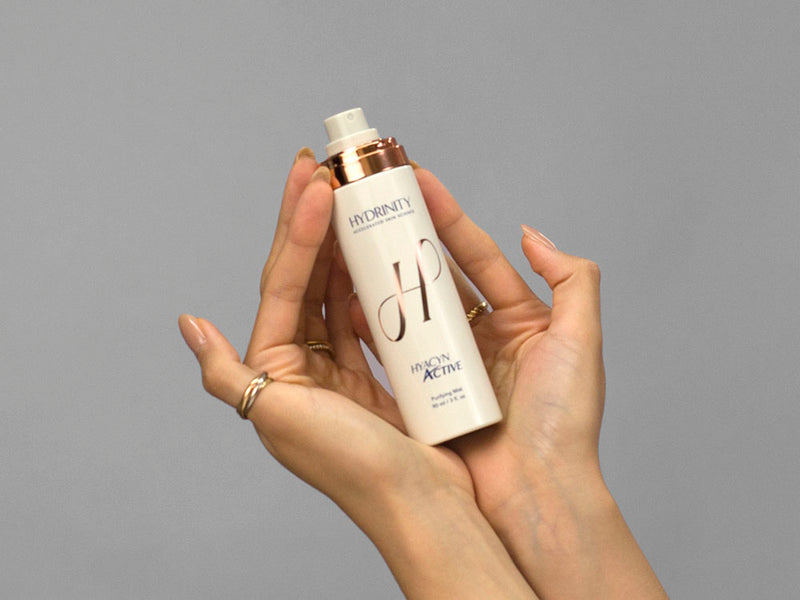
  • Hydrinity

    Hyacyn Active Purifying Mist

    4.9 out of 5.0 stars

    $59.00

  • Face Reality

    Omni Clear Mist

    4.7 out of 5.0 stars

    $40.00

More Ingredient Guides

View all

German chamomile flowers beside a slate blue dish holding drops of clear, pale golden oil on a warm stone surface.

Bisabolol for Calming Redness and Irritation

Bisabolol is the calming compound first found in chamomile, and it quiets the inflammation behind redness, stinging and itch. Here is how it works, who it suits and how to use it.

Read moreabout Bisabolol for Calming Redness and Irritation

Fresh comfrey leaves and purple flowers beside a slate blue dish of fine white allantoin powder on a warm stone surface.

Allantoin for Rough, Dry and Irritated Skin

Allantoin softens rough, flaky skin and soothes irritation, and the US FDA recognizes it as a skin protectant. Here is how it works, what the research shows and how to use it.

Read moreabout Allantoin for Rough, Dry and Irritated Skin

Fresh centella sprigs with small round scalloped leaves on a warm stone surface beside a slate blue ceramic dish, against a soft blush backdrop.

Centella for Redness and Reactive Skin

Centella calms inflammation, helps skin hold on to water and supports repair after irritation. Here is what the research shows, what cica means on a label and how to use it.

Read moreabout Centella for Redness and Reactive Skin