5 min read

If you get the red, sore breakouts, benzoyl peroxide is probably the most dependable thing you can put on them. It has been clearing acne for decades, and unlike the topical and oral antibiotics used for acne, it does not stop working over time. Start at 2.5 percent and most people find it easy to use every day.

The short answer

Benzoyl peroxide kills the bacteria behind inflamed acne, and it does it in a way those bacteria cannot adapt to, which makes it unusually reliable. It settles red, sore breakouts within a few weeks and stops new ones forming. Two and a half percent clears just as well as the stronger versions with less dryness, so that is where we like to start you off.

Suits Oily, Combination, Acne-prone, Normal
Read time 5 min
Cross-section diagram of a blocked pore showing a plug of dead cells, bacteria trapped in the airless space below, and inflammation around it.
A blocked pore creates an airless space where acne bacteria thrive. The redness and soreness you see is your immune system responding to them.

What it does

Benzoyl peroxide kills the bacteria behind inflamed acne, and it does it in a way those bacteria cannot adapt to, which makes it unusually reliable. It settles red, sore breakouts within a few weeks and stops new ones forming. Two and a half percent clears just as well as the stronger versions with less dryness, so that is where we like to start you off.

What causes an inflamed breakout

A breakout starts with a blocked pore. Dead skin cells and oil build up inside it and form a plug.

Inside that blocked pore is a sealed space with no oxygen in it, and a bacterium that normally lives harmlessly on everyone's skin finds those conditions ideal. It multiplies. Your immune system responds to that, and the swelling, redness and soreness you can see is the immune response rather than the bacteria themselves.

That is the difference between a blackhead and an angry spot. Both start as a blocked pore. Only one has become inflamed.

How benzoyl peroxide works

Those bacteria can only survive where there is no oxygen. When benzoyl peroxide breaks down on your skin, it releases oxygen into that sealed space, and they cannot survive it.

In other words, it removes the one condition they depend on.

Why it never stops working

Bacteria become resistant to antibiotics over time. They adapt around the specific target the drug was designed to hit, the drug stops working, and this is why an antibiotic that cleared your skin at nineteen might do very little at twenty-six. It applies to both the topical antibiotics used on acne and the oral ones.

Benzoyl peroxide gives them nothing to adapt around. It floods the area with oxygen rather than targeting one part of how the bacteria function, and there is no way to evolve a tolerance for an environment you cannot live in. Bacteria have never developed resistance to benzoyl peroxide, and the bottle you buy in ten years will work exactly as well as the one you buy today.

What else it does

It exfoliates lightly, which helps clear the dead cells that block pores in the first place, and it reduces the free fatty acids in your skin oil that feed inflammation. Both of those make it a preventative ingredient as well as a treatment.

Where benzoyl peroxide comes from

Benzoyl peroxide is made in a lab and has no plant origin behind it, unlike most of the ingredients we write about here.

It has been used on acne since the 1930s and sold without a prescription for generations, which is part of why it is so thoroughly understood. Very few things in skincare have that much history.

Chart comparing benzoyl peroxide at 2.5, 5 and 10 percent, showing equal clearing across all three but increasing dryness at higher strengths.
Across studies of 153 people, 2.5 percent cleared spots as well as 10 percent did. The only thing the higher strengths added was dryness.

What to look for on a label

Start at 2.5 percent, and you may never need more

This is the rare ingredient where the research settles the question neatly. Across a set of studies covering 153 people, 2.5 percent benzoyl peroxide cleared inflamed spots just as well as 5 percent and 10 percent did.

The difference showed up in the side effects, with the 2.5 percent causing noticeably less flaking, redness and burning than the 10 percent.

Begin at 2.5 percent, and for a lot of people that is where to stay. Remain there as long as your skin is still improving, however many months that takes. If you reach a point where progress has stopped and there is still acne to work on, that is when 5 percent becomes worth trying.

Ten percent is mostly used on the body, where skin is thicker and more tolerant. On the face, the research says you are buying more dryness rather than more clearing.

Wash-off or leave-on

How we choose between them at LAZ Skincare comes down to how much acne you have.

For mild inflamed breakouts, we start with a benzoyl peroxide wash. It is often enough on its own, and because it rinses off within a minute it is an easy thing for your skin to get used to.

For stronger acne, a wash alone will not get you there, so we go to a leave-on treatment introduced gradually. The full method is set out in the How to use it section below.

What works best with benzoyl peroxide

Niacinamide is an excellent partner. One study pairing 2.5 percent benzoyl peroxide with 5 percent niacinamide got better results than the benzoyl peroxide on its own, and niacinamide helps with the dryness too.

For the marks breakouts leave behind, add a pigment ingredient. Azelaic, arbutin and kojic acids all work well alongside benzoyl peroxide, and they are working on something it cannot do much about on its own. A retinoid pairs nicely as well, usually on alternate nights to begin with.

Sunscreen every morning, and reapply through the day. To be straight with you, sunscreen will not stop post-breakout marks appearing altogether, which is exactly why the pigment ingredients are worth having. What it does is keep those marks from darkening much further, and let the pigment ingredients make progress instead of spending their effort undoing sun damage.

Common questions

How long until I see results?

Faster than most skincare. Inflamed spots usually begin settling within two to four weeks, and the fuller picture arrives by around twelve. It starts reducing bacteria in the first two weeks, before there is much to see, so it is working before it looks like it.

Will it stop working over time?

No, and this is what makes benzoyl peroxide special. Acne bacteria have never developed resistance to it, which is not true of the antibiotics used for acne. You can use it for years and it will keep doing the same job.

Do I put it on spots or all over?

All over the area that breaks out. By the time you can see a spot, it started forming a week or two earlier, so working on only what is visible keeps you a step behind. Whole-area use is what stops the next round.

Can I use it with a retinoid?

Yes, they come at acne from different directions and make a good pair. Start on alternate nights. Once your skin has settled, the arrangement we prefer is retinoid in the morning and benzoyl peroxide at night, so the benzoyl peroxide has the long overnight stretch to work in. Alternating them night by night works too.

Does it help with the marks left behind?

Indirectly. Post-breakout marks come from the inflammation, so fewer inflamed spots means fewer marks forming in the first place. For the marks already there, add a pigment ingredient like azelaic, arbutin or kojic acid.

Will it lift the color out of my towels?

It will, along with pillowcases and t-shirts. Switch to white cotton for anything that touches your face while you are using it and you will never think about it again.

Diagram showing oxygen entering a blocked pore and breaking down the bacteria living in the airless space inside.
Benzoyl peroxide releases oxygen into the one place those bacteria cannot survive it. There is no adapting to that.

How to use it

In the clinic we start people on a timed schedule rather than leaving it on overnight from day one. You put it on, leave it for a set stretch, then wash it off, and you extend that stretch as your skin gets comfortable. It sounds fussy for about a week and then it becomes second nature, and it is the difference between clearing your acne and giving up because your face is peeling.

Here is how the build works.

  • Start at 2.5 percent, once a day, five minutes on clean skin. Then rinse it off and follow with a hydrating serum and your moisturizer.
  • Build up over the following weeks as your skin stays comfortable: five minutes, then fifteen, then thirty, then an hour, then two, and eventually overnight.
  • Once you are leaving it on overnight, change the order. Hydrating serum first, let it absorb properly, then the benzoyl peroxide on top.
  • Be careful about what you layer over it overnight. Most moisturizers will reduce how well the benzoyl peroxide works, so choose something light and water-based instead of a rich cream.
  • Apply it across the whole area that breaks out rather than onto individual spots. Most of the value is in what never appears.
  • A thin layer is plenty. More product will not clear you faster, it will only dry you out.
  • White towels and pillowcases while you are using it, and it is worth checking what you sleep in too.
  • Broad spectrum SPF 30 or higher every morning, reapplied through the day.
  • Take a photo on day one, then one every four weeks in the same spot and the same light. Breakout counts change too gradually to judge in the mirror, and the side by side is what shows you it is working.
Evidence and sources
  • Mills OH, Kligman AM, et al. Comparing 2.5%, 5%, and 10% benzoyl peroxide on inflammatory acne vulgaris. Three double-blind studies, 153 patients. The source of the 2.5 percent recommendation. View on PubMed
  • Clinical comparison of topical 2.5% benzoyl peroxide plus 5% niacinamide to 2.5% benzoyl peroxide alone in mild to moderate facial acne. Journal of Clinical and Aesthetic Dermatology. A small split-face study, and the basis for the niacinamide pairing. Read the study

A note on the evidence. Benzoyl peroxide is one of the best-studied ingredients in dermatology, with decades of trials behind it, so the claims here rest on unusually firm ground. The concentration study is from 1986 and small by modern standards, but its finding has held up and is reflected in current prescribing guidance. The niacinamide pairing study is small, so treat that one as promising rather than settled.

Last reviewed

Products with Benzoyl Peroxide

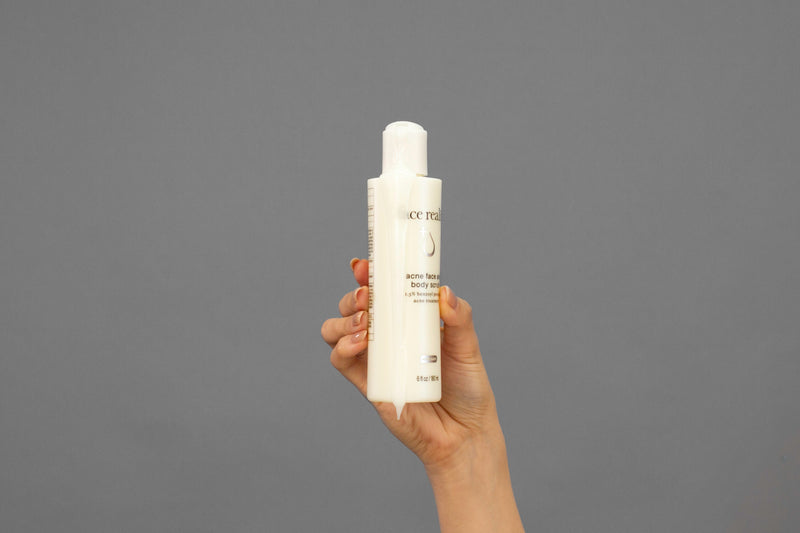
  • Face Reality

    Acne Face & Body Scrub

    4.9 out of 5.0 stars

    $37.00

  • Face Reality

    Acne Face & Body Wash

    4.7 out of 5.0 stars

    $36.00

  • Face Reality

    Advanced Acne Med

    4.9 out of 5.0 stars

    From $29.00

  • GlyMed

    $45.00

  • Vivant

    BP 10% Gel Medication

    5.0 out of 5.0 stars

    $44.00

  • Vivant

    $26.00 Sold out

More Ingredient Guides

View all

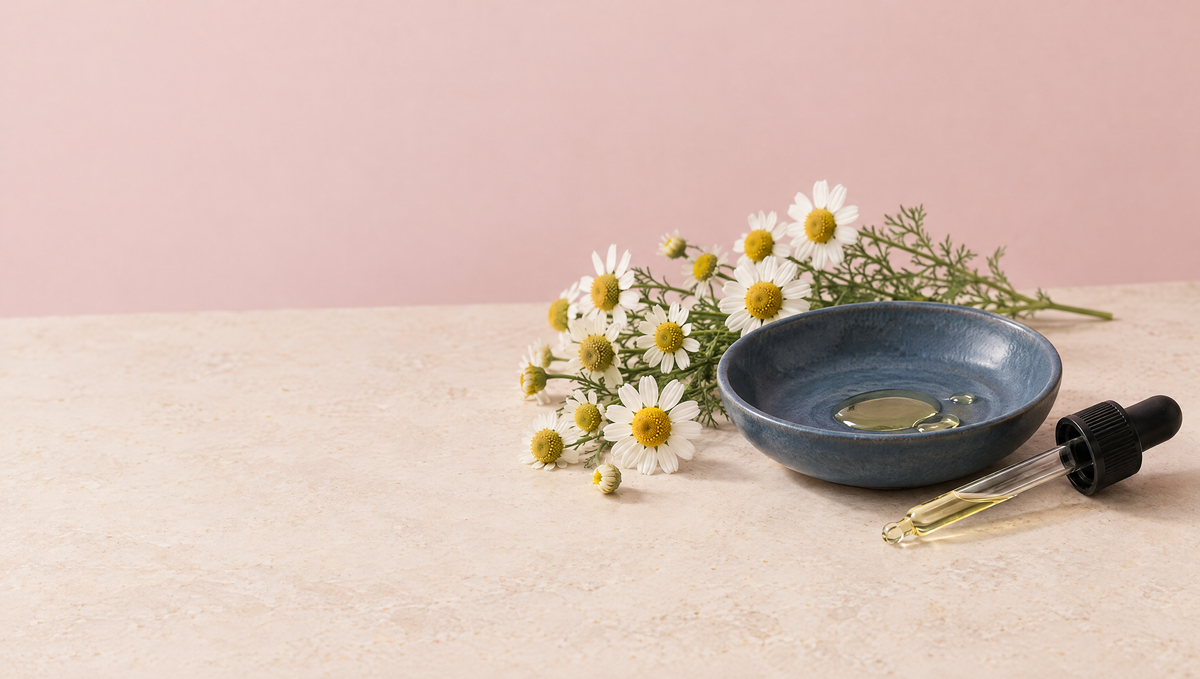
German chamomile flowers beside a slate blue dish holding drops of clear, pale golden oil on a warm stone surface.

Bisabolol for Calming Redness and Irritation

Bisabolol is the calming compound first found in chamomile, and it quiets the inflammation behind redness, stinging and itch. Here is how it works, who it suits and how to use it.
Read moreabout Bisabolol for Calming Redness and Irritation

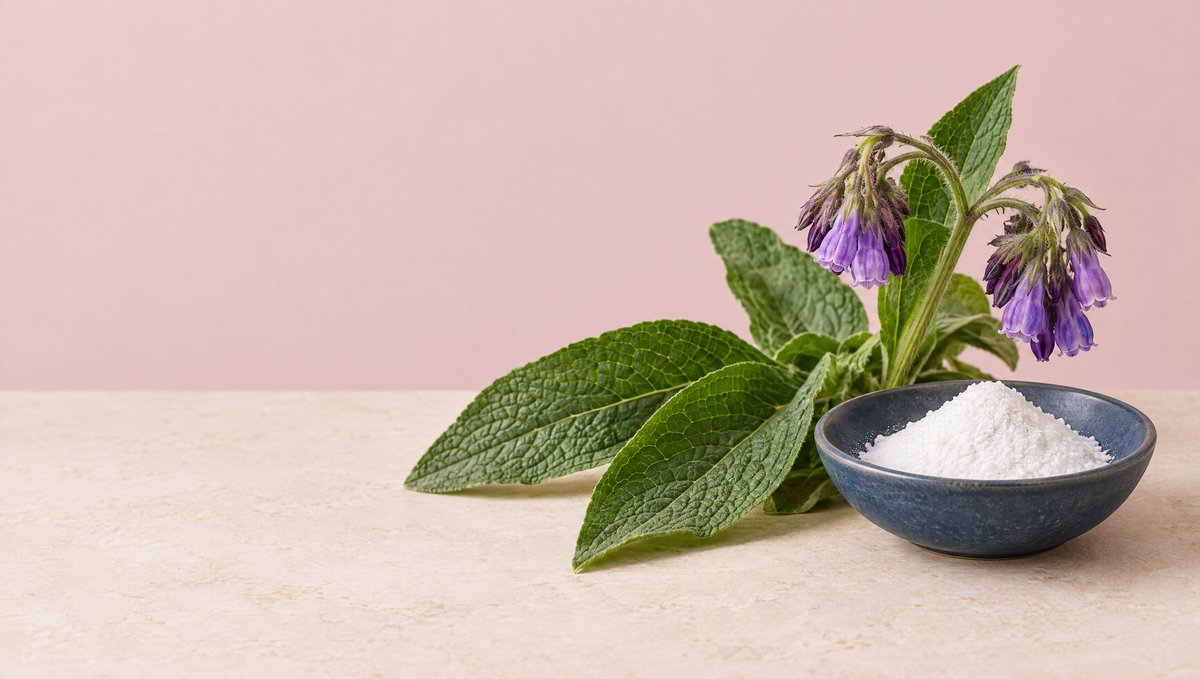
Fresh comfrey leaves and purple flowers beside a slate blue dish of fine white allantoin powder on a warm stone surface.

Allantoin for Rough, Dry and Irritated Skin

Allantoin softens rough, flaky skin and soothes irritation, and the US FDA recognizes it as a skin protectant. Here is how it works, what the research shows and how to use it.
Read moreabout Allantoin for Rough, Dry and Irritated Skin

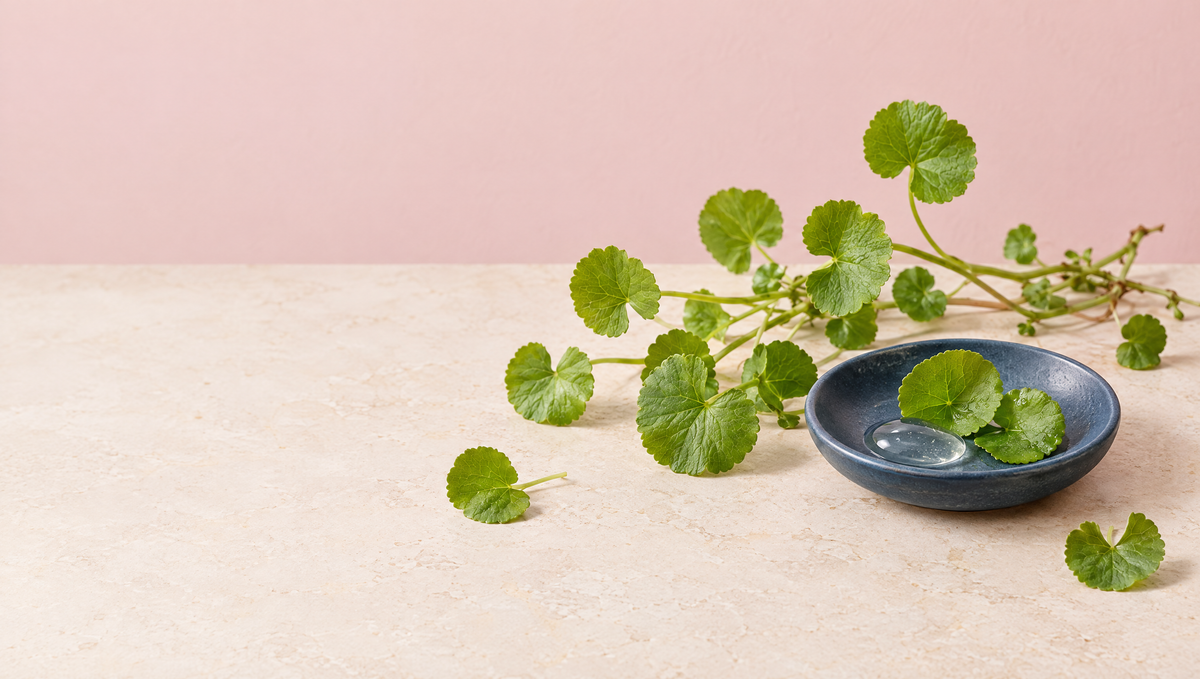
Fresh centella sprigs with small round scalloped leaves on a warm stone surface beside a slate blue ceramic dish, against a soft blush backdrop.

Centella for Redness and Reactive Skin

Centella calms inflammation, helps skin hold on to water and supports repair after irritation. Here is what the research shows, what cica means on a label and how to use it.

Read moreabout Centella for Redness and Reactive Skin