5 min read

Most skincare ingredients solve one problem. Azelaic acid works on breakouts, calms redness and fades the brown marks left behind, all at the same time. It is also gentle enough to keep using through pregnancy, which almost nothing else in the acne category can claim.

The short answer

Azelaic acid calms inflammation, reduces the bacteria involved in acne, keeps pores from clogging and slows pigment production. That combination lets one ingredient handle breakouts, redness and dark marks together. Redness often improves within a month, breakouts follow, and pigment takes twelve to sixteen weeks. It suits every skin tone and it is one of the safest options during pregnancy.

Suits All skin types, Sensitive, Acne-prone, Rosacea-prone
Read time 5 min
Diagram showing azelaic acid doing four jobs at once: calming redness, reducing acne bacteria, keeping pores clear and fading dark marks.
It is the combination that makes azelaic acid useful rather than any one of these on its own.

What it does

Azelaic acid calms inflammation, reduces the bacteria involved in acne, keeps pores from clogging and slows pigment production. That combination lets one ingredient handle breakouts, redness and dark marks together. Redness often improves within a month, breakouts follow, and pigment takes twelve to sixteen weeks. It suits every skin tone and it is one of the safest options during pregnancy.

What azelaic acid does

Four things, and the combination of all four is what makes azelaic acid unique.

It calms inflammation

Inflammation is one of the root causes of aging skin, and it is why breakouts come up red and sore. Inflammation is also what can make rosacea look flushed.

Azelaic acid quiets the signaling that keeps that going, so spots look less angry and redness settles.

This is also why it works on the brown marks breakouts leave behind. Those marks are caused by the inflammation rather than by the spot itself, so calming things down means fewer post-breakout marks form in the first place.

It reduces acne bacteria

Acne involves bacteria living inside blocked pores. Azelaic acid reduces their numbers, which stops a forming breakout from progressing.

It keeps pores clear

Pores block when dead skin cells build up inside them. Azelaic acid loosens those cells so they shed more efficiently, which prevents the blockage a breakout starts from. It exfoliates lightly while it does this, so texture tends to smooth out as well.

It slows excess pigment production

Your skin makes brown pigment using an enzyme called tyrosinase. Azelaic acid slows that enzyme, so less new pigment is produced and existing marks fade as your skin renews.

What makes it unusual among pigment ingredients is that it is selective. It acts on the cells that are overproducing and largely leaves normal ones alone, so it evens out dark patches without lightening the skin around them. Your natural skin tone is genetic and is not affected.

Where azelaic acid comes from

It occurs naturally in grains such as barley, wheat and rye. More interestingly, your own skin already produces it, because a yeast that lives on everyone's face makes azelaic acid as part of normal life up there.

What goes into skincare is made in a lab, so that a formula contains a known and consistent amount. Eating more rye bread will not do what azelaic acid does on the skin. It has to be applied topically to work.

Diagram showing azelaic acid doing four jobs at once: calming redness, reducing acne bacteria, keeping pores clear and fading dark marks.
It is the combination that makes azelaic acid useful rather than any one of these on its own.

What to look for on a label

Ten percent is the working strength

Ten percent is what you will find in a well-made cosmetic product, and it is what we stock. Stronger versions exist, and going stronger is not the lever most people need.

With azelaic acid, using it consistently and giving it enough time does considerably more than chasing a bigger number. Higher strengths are also more likely to sting, which is usually why people stop.

Texture is worth paying attention to

Azelaic acid is awkward to formulate. It does not dissolve easily, so some products feel gritty or leave a white cast, and others sit heavily under makeup.

That matters more than it sounds. A version you like the feel of is a version you will keep using, and with this ingredient consistency is most of the result.

What works best with it

Niacinamide is a natural partner, since it also calms redness and works on pigment from a different angle. Arbutin or tranexamic acid are worth adding if dark marks are your main concern.

It sits well alongside a retinoid too, usually on alternate nights while your skin settles into both.

Sunscreen every morning, reapplied through the day. Sun exposure darkens the marks you are working on and makes them much slower to fade, so protection is doing as much for your result as the azelaic acid is.

Common questions

Can I use it while pregnant or breastfeeding?

Azelaic acid has the most reassuring track record of the ingredients in this category, and it is widely recommended during pregnancy for both breakouts and dark patches. Do check with your OB or midwife before starting anything new while you are expecting, and this is usually the one that gets a yes.

How long until I see results?

Different concerns improve at different speeds. Redness often settles first, sometimes within a month. Breakouts follow. Dark marks are the slowest and need twelve to sixteen weeks, because you are waiting for your skin to renew its surface several times over.

Around week six is where people tend to decide it is not working and start adding more products. Almost always the better move is to give it more time and change nothing.

Photograph your skin on day one and again every four weeks, in natural daylight and from the same spot.

Does it sting?

At ten percent, most people feel nothing at all. Some notice mild warmth or tingling in the first couple of weeks, which settles as skin gets used to it.

If stinging continues, or redness gets worse rather than better, drop back to every other day and build up more slowly.

Is it an exfoliating acid like glycolic?

It does exfoliate, lightly. It helps loosen the dead cells that block pores, so texture smooths out over time.

Glycolic acid works in a different way. It exfoliates the surface more actively, which is why it moves faster on texture and fine lines, and why it leaves skin more sun sensitive while you are using it. Both are excellent at what they do, and they suit different situations.

With azelaic acid, most of the work is calming inflammation, and the light exfoliation comes alongside it.

Can I use it with a retinoid?

Yes, and they complement each other well. Start on alternate nights rather than using both at once, and give your skin a few weeks to adjust before layering them in the same routine.

Will it help with fine lines?

There is no good evidence that it does. Azelaic acid is excellent at what it is good at, and fine lines are not on that list. A retinoid is the ingredient for that.

Diagram comparing non-selective lightening, which pales every cell, with azelaic acid's selective action on only the overproducing cells.
Azelaic acid acts on cells that are overproducing and largely leaves normal ones alone, so it evens out patches without lightening the skin around them.

How to use it

  • Start once daily at night on clean, dry skin. If your skin is sensitive or prone to redness, every other night for the first two weeks.
  • Build up to twice daily if your skin is comfortable with it. Most people settle at once or twice a day long term.
  • Apply across the whole affected area rather than onto individual spots. It prevents as much as it clears, so working on only what you can see leaves you a step behind.
  • Always follow with your moisturizer. Azelaic acid goes on first, onto clean skin, so nothing sits between it and your face.
  • Broad spectrum SPF 30 or higher every morning, reapplied through the day.
  • Photograph your skin on day one, then every four weeks in natural daylight from the same spot, and give the dark marks sixteen weeks before judging them.
Evidence and sources
  • King M, et al. A systematic review to evaluate the efficacy of azelaic acid in the management of acne, rosacea, melasma and skin aging. Journal of Cosmetic Dermatology, 2023. Forty-three randomized trials. Source of the comparison with hydroquinone and of the finding that no usable trials exist for skin aging. View on PubMed
  • A comprehensive review of azelaic acid pharmacological properties, clinical applications and topical formulations, 2025. Covers the fifteen and twenty percent strengths across rosacea, acne and pigmentation, and why the vehicle matters so much with this ingredient. Read the review

A note on the evidence. Azelaic acid is better studied than most cosmetic ingredients, because the fifteen and twenty percent versions are prescription medicines that went through proper trials. The ten percent cosmetic strength has been studied less directly, so some of what we say about it is reasonably scaled down from those results rather than measured at that concentration. Its use in pregnancy is well established in dermatology practice, though that is still a decision for your own clinician.

Last reviewed

Products with Azelaic Acid

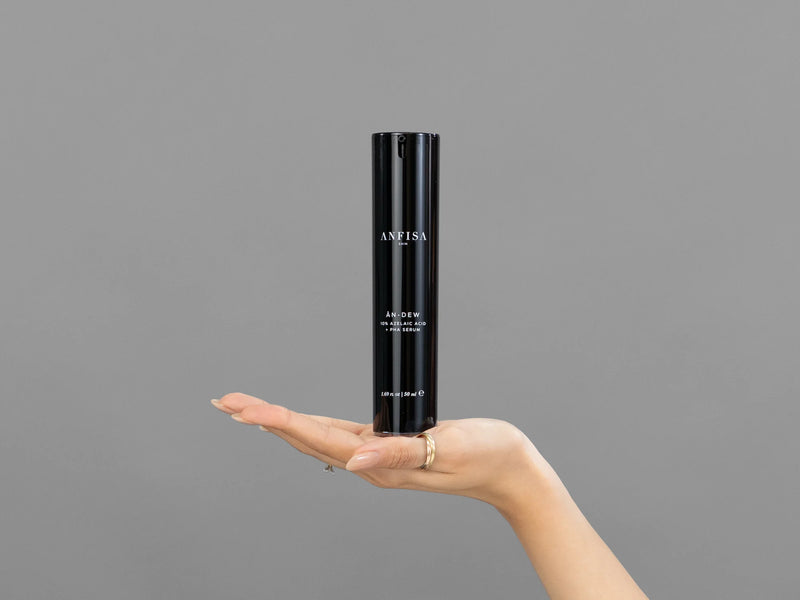
  • Anfisa

    Γ‚N-DEW

    4.9 out of 5.0 stars

    From $125.00

  • Marini SkinSolutions

    Bioclear Face Lotion

    5.0 out of 5.0 stars

    $103.00

  • Face Reality

    GlowTone Corrective Serum

    4.8 out of 5.0 stars

    $64.00

  • Marini SkinSolutions

    $103.00

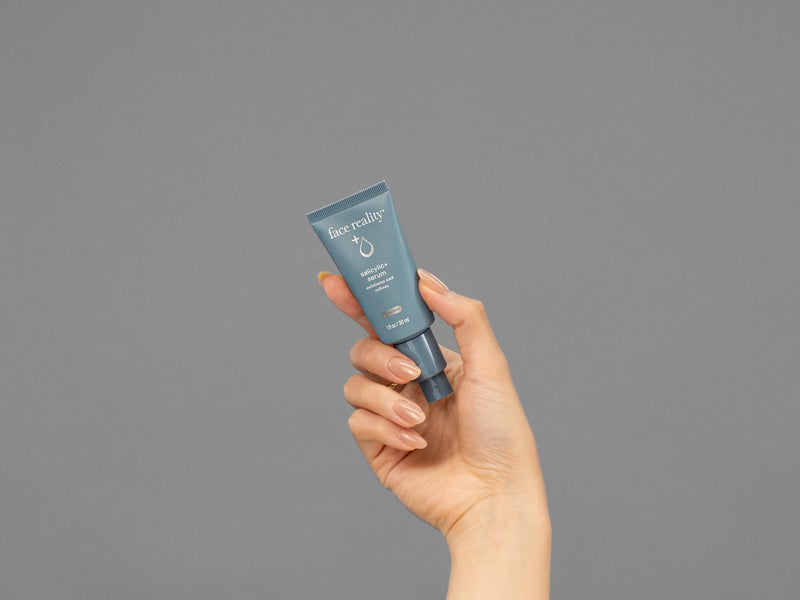
  • Face Reality

    Salicylic+ Serum

    4.8 out of 5.0 stars

    $34.00

More Ingredient Guides

View all

German chamomile flowers beside a slate blue dish holding drops of clear, pale golden oil on a warm stone surface.

Bisabolol for Calming Redness and Irritation

Bisabolol is the calming compound first found in chamomile, and it quiets the inflammation behind redness, stinging and itch. Here is how it works, who it suits and how to use it.
Read moreabout Bisabolol for Calming Redness and Irritation

Fresh comfrey leaves and purple flowers beside a slate blue dish of fine white allantoin powder on a warm stone surface.

Allantoin for Rough, Dry and Irritated Skin

Allantoin softens rough, flaky skin and soothes irritation, and the US FDA recognizes it as a skin protectant. Here is how it works, what the research shows and how to use it.
Read moreabout Allantoin for Rough, Dry and Irritated Skin

Fresh centella sprigs with small round scalloped leaves on a warm stone surface beside a slate blue ceramic dish, against a soft blush backdrop.

Centella for Redness and Reactive Skin

Centella calms inflammation, helps skin hold on to water and supports repair after irritation. Here is what the research shows, what cica means on a label and how to use it.

Read moreabout Centella for Redness and Reactive Skin