5 min read

If you could only add one ingredient to your routine, niacinamide would be a strong candidate. It calms redness, strengthens the barrier, evens out dark marks, helps with oil and supports collagen, and it does all of that without irritating anyone.

The short answer

Niacinamide is vitamin B3, and few ingredients do this many jobs this well. It calms inflammation, helps your skin build ceramides, stops pigment being handed to your surface cells, regulates oil and supports collagen. Redness and oiliness improve within about four weeks, excess pigment and texture take twelve. It layers with everything and suits every skin type and tone.

Suits All skin types, Oily, Combination, Sensitive, Acne-prone, Rosacea-prone, Normal
Read time 5 min
Diagram showing pigment being made in one cell and handed to a surface cell, with arbutin slowing production and niacinamide blocking the handover.
Most pigment ingredients slow the manufacturing. Niacinamide blocks the handover instead, which is why they work well together.

What it does

Niacinamide is vitamin B3, and few ingredients do this many jobs this well. It calms inflammation, helps your skin build ceramides, stops pigment being handed to your surface cells, regulates oil and supports collagen. Redness and oiliness improve within about four weeks, excess pigment and texture take twelve. It layers with everything and suits every skin type and tone.

Why one ingredient does so many things

A list of unrelated benefits usually means an ingredient does none of them well. Niacinamide is the exception, and there is a reason for that worth understanding.

Your cells convert niacinamide into NAD+, which is the molecule that powers cellular energy and DNA repair. That is the root of it. Give a cell more of what it runs on and it does all of its own jobs better, which is why the effects show up in so many different places rather than in one.

What it actually does

It builds your barrier

The outer layer of your skin works like a brick wall, with cells as the bricks and a mixture of fats as the mortar between them. That mortar keeps water in and irritants out.

Niacinamide increases your skin's own production of ceramides and the other fats that make up that mortar. That is why it helps with dryness, sensitivity and reactivity.

It is a different approach from applying ceramides directly. One replaces what is missing, the other asks your skin to make more of its own. Both are worth having.

It works on excess pigment differently from everything else

Making a dark mark takes two stages. Pigment cells manufacture melanin, then hand it over to the surface cells that display it.

Most pigment ingredients slow the manufacturing. Niacinamide blocks the handover instead, stopping finished pigment from being passed along.

That is why it pairs so well with arbutin, kojic acid and the rest. They slow production, niacinamide blocks delivery, and you are interrupting the same process at two separate points.

It calms redness and regulates oil

Niacinamide quiets the inflammatory signaling that keeps skin red and reactive, which is why it suits skin prone to flushing.

It also appears to regulate how much oil your skin produces. Over a couple of months that tends to make pores look smaller, because less oil collecting inside a pore means less of it stretching the pore open.

None of this comes with an irritation phase, which is the other reason it is so widely used. There is nothing to build your tolerance up to with niacinamide, so you can use it every day from the start.

Where niacinamide comes from

Niacinamide is a form of vitamin B3, the same vitamin you get from meat, fish, eggs and grains. Your body needs it whether or not you ever put it on your face.

What goes into skincare is made in a lab. That matters more here than usual, because niacinamide has a close relative called niacin that causes flushing, and producing it under controlled conditions is how you get one and not the other.

Eating more vitamin B3 will not do the same job. Your diet keeps your body supplied, and a serum applied topically delivers far more of it to your skin specifically than food ever reaches your skin with.

Diagram showing niacinamide converting into NAD+ and producing five effects: less redness, stronger barrier, evener tone, less oil and more collagen.
Give a cell more of what it runs on and it does all of its own jobs better. That is why the effects show up in so many places.

What to look for on a label

Four to five percent is where the evidence sits

Most of the research behind niacinamide used concentrations in this range, and it is where the benefits are best established. Two percent still does useful work on the barrier.

Ten percent products are common, and the research does not show better results above about five percent. Higher concentrations are more likely to leave skin flushed or uncomfortable, which means a bigger number on the bottle can cost you rather than gain you something.

It is everywhere, and that is fine

Niacinamide turns up in cleansers, serums, moisturizers and sunscreens, and it is stable enough to work in all of them. You do not necessarily need a dedicated niacinamide serum if it is already sitting at a decent level in your moisturizer.

Where it sits in your routine

A niacinamide serum goes on after cleansing and before your moisturizer. If your niacinamide is in a moisturizer or a sunscreen, use that product at its usual point in your routine.

What works best with niacinamide

Almost everything, and several pairings are genuinely better than the parts. With pigment ingredients such as arbutin and kojic acid it works on excess pigment from a second angle. With benzoyl peroxide it improves the result and takes some of the dryness out. With retinoids and exfoliating acids it supports the barrier those ingredients put under strain.

Ceramides are a natural partner too, since niacinamide encourages your skin to build its own while the ceramides fill the gaps directly.

Sunscreen every morning, reapplied through the day. Niacinamide does not make your skin sun sensitive, and sun undoes the work it is doing on excess pigment and barrier, so protecting your progress is the point here.

Common questions

Can I use it with vitamin C?

Yes. Plenty of well-made products contain both, and you can use them together.

The idea that they cancel each other out comes from laboratory work done in the 1960s using unstable raw materials at high heat, which bears no resemblance to a modern formula on a modern face.

Will it really make my pores smaller?

It makes them look smaller, which in practice is what people want.

Pore size is genetic. A pore stretched by trapped oil looks considerably larger than the same pore when it is clear, and niacinamide regulates oil and keeps things moving, so over a couple of months the appearance improves noticeably.

How soon will I see something?

Redness and oiliness improve around the four-week mark, and barrier comfort often comes sooner. Excess pigment and texture normally need twelve weeks.

Photograph your skin on day one and every four weeks after, in natural daylight from the same spot.

Why does it make me flush?

Almost always the concentration. Flushing is far more common at ten percent and above, and dropping to four or five percent normally resolves it without costing you any of the benefits.

Do I need it if I use ceramides?

They work well together, and neither replaces the other. Ceramides fill the gaps in your barrier directly, and niacinamide asks your skin to produce more of its own. One is immediate and one is longer-term.

Is it safe in pregnancy?

Niacinamide is one of the easiest ingredients to keep using when a lot of actives come off the table. It is a vitamin, it is well tolerated, and it keeps working on redness, excess pigment and barrier through those months. Check with your OB or midwife, and this one rarely causes any hesitation.

Diagram comparing a pore stretched wide by trapped oil with the same pore clear and visibly narrower.
Pore size is genetic. A pore stretched by trapped oil simply looks considerably larger than the same pore when it is clear.

How to use it

  • Morning and night, both if you like. There is no limit and nothing to build your tolerance up to.
  • A niacinamide serum goes on after cleansing, before your moisturizer. If your niacinamide is in a moisturizer or sunscreen instead, use that product at its usual point in your routine.
  • Use it alongside your retinoid or exfoliating acid rather than on separate nights. Supporting the barrier on the nights it is under most strain is the whole point.
  • Four to five percent is the range to look for. If a stronger serum has flushed or stung you, moving down will not cost you results.
  • Check what you already own before buying another one. You may be using niacinamide in another product without realizing.
  • Broad spectrum SPF 30 or higher every morning, reapplied through the day, to protect the progress you are making.
  • Photograph your skin on day one, then every four weeks in natural daylight from the same spot, and give excess pigment twelve weeks before judging it.
Evidence and sources

A note on the evidence. Niacinamide is among the best-studied ingredients in cosmetic dermatology, with clinical work going back decades covering barrier function, ceramide production, pigment transfer, sebum regulation and inflammation. The four to five percent range used in most of that research is why we point to it. The claim that niacinamide and vitamin C cannot be combined comes from 1960s laboratory conditions that bear no resemblance to modern formulation, and it has been thoroughly set aside. Pore appearance and fine lines are the areas where results are more modest than marketing suggests, though still real.

Last reviewed

Products with Niacinamide

  • SkinBetter Science

    A-Team Duo Kit

    5.0 out of 5.0 stars

    $185.00

  • KrX Aesthetics

    Active 31 Revitalizing Eye Cream

    5.0 out of 5.0 stars

    $46.00

  • Epicuren

    $53.00

  • SkinBetter Science

    AlphaRet Body Overnight Cream

    5.0 out of 5.0 stars

    From $40.00

  • SkinBetter Science

    AlphaRet Clearing Serum

    4.8 out of 5.0 stars

    From $145.00

  • SkinBetter Science

    AlphaRet Overnight Cream

    5.0 out of 5.0 stars

    From $76.00

  • SkinBetter Science

    Alto Advanced Defense and Repair Serum

    4.9 out of 5.0 stars

    From $100.00

  • SkinBetter Science

    Ampra Volumizing Serum

    4.7 out of 5.0 stars

    From $96.00

  • SkinBetter Science

    Better Balance Duo

    4.7 out of 5.0 stars

    $185.00

  • Pavise

    Bioadaptive Stress Repair

    4.6 out of 5.0 stars

    From $50.00

  • GlyMed

    Brilliant Tone

    5.0 out of 5.0 stars

    $102.00

  • Face Reality

    Clearderma Moisturizer

    4.8 out of 5.0 stars

    $33.00

  • Vivant

    $86.00

  • Face Reality

    Daily SPF 30 Plus

    4.9 out of 5.0 stars

    $36.00

  • Vivant

    Derm-A-Gel

    4.0 out of 5.0 stars

    $86.00

  • Vivant

    Derm-A-Renew

    5.0 out of 5.0 stars

    $148.00

  • Pavise

    Dynamic Age Defense SPF 30

    4.7 out of 5.0 stars

    From $52.00

  • Calecim

    Eye Contour Lifting Cream

    5.0 out of 5.0 stars

    $160.00

  • SkinBetter Science

    EyeMax AlphaRet Overnight Cream

    4.8 out of 5.0 stars

    $135.00

  • Vivant

    $226.00

  • Pavise

    Gentle Amino Powerwash

    4.9 out of 5.0 stars

    From $20.00

  • Lumiellé

    Glass Skin Liquid Exfoliant

    5.0 out of 5.0 stars

    From $30.00

More Ingredient Guides

View all

German chamomile flowers beside a slate blue dish holding drops of clear, pale golden oil on a warm stone surface.

Bisabolol for Calming Redness and Irritation

Bisabolol is the calming compound first found in chamomile, and it quiets the inflammation behind redness, stinging and itch. Here is how it works, who it suits and how to use it.
Read moreabout Bisabolol for Calming Redness and Irritation

Fresh comfrey leaves and purple flowers beside a slate blue dish of fine white allantoin powder on a warm stone surface.

Allantoin for Rough, Dry and Irritated Skin

Allantoin softens rough, flaky skin and soothes irritation, and the US FDA recognizes it as a skin protectant. Here is how it works, what the research shows and how to use it.
Read moreabout Allantoin for Rough, Dry and Irritated Skin

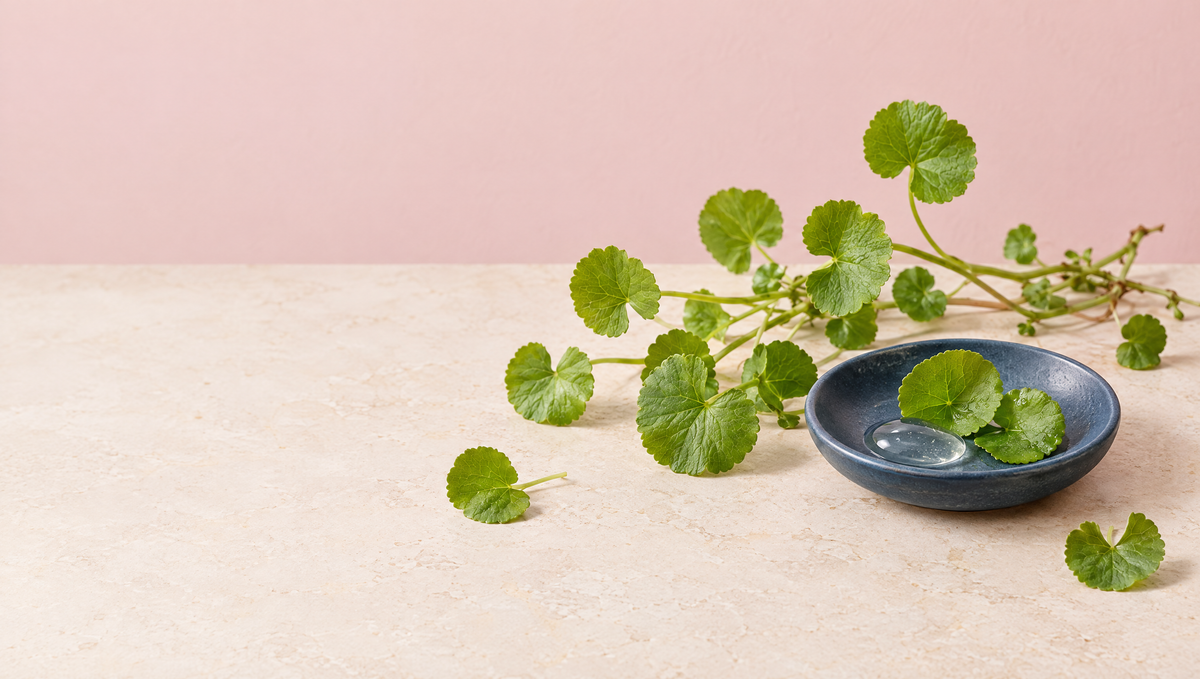
Fresh centella sprigs with small round scalloped leaves on a warm stone surface beside a slate blue ceramic dish, against a soft blush backdrop.

Centella for Redness and Reactive Skin

Centella calms inflammation, helps skin hold on to water and supports repair after irritation. Here is what the research shows, what cica means on a label and how to use it.

Read moreabout Centella for Redness and Reactive Skin