5 min read

Kojic acid comes from the fungus used to brew sake, and this was discovered because sake brewers were known for the remarkably even skin tone on their hands. It slows the same enzyme arbutin does, from a different angle, which is why the two work so well together.

The short answer

Kojic acid slows tyrosinase, the enzyme your skin uses to make pigment, by taking away the copper that enzyme needs in order to work. Your skin produces less of the excess pigment that forms dark marks, and the marks you already have fade as your skin turns over. Your normal skin tone carries on as usual. Expect eight to twelve weeks, and wear sunscreen or you will be undoing the work as you go.

Suits Normal, Oily, Combination, Acne-prone, Mature
Read time 5 min
Diagram showing arbutin blocking the entry point of the tyrosinase enzyme while kojic acid removes the copper it needs to work.
Kojic acid takes away the copper the enzyme needs. Arbutin blocks the entry point. Two ways of stopping the same machine.

What it does

Kojic acid slows tyrosinase, the enzyme your skin uses to make pigment, by taking away the copper that enzyme needs in order to work. Your skin produces less of the excess pigment that forms dark marks, and the marks you already have fade as your skin turns over. Your normal skin tone carries on as usual. Expect eight to twelve weeks, and wear sunscreen or you will be undoing the work as you go.

Why dark marks form

Your skin contains cells whose job is to make a brown pigment called melanin. Melanin gives your skin its color, and it is also a defense system. When skin is threatened, those cells produce extra melanin to shield the tissue underneath.

Four things set that off. Sunlight is the most common. Inflammation is the second, which is why breakouts leave brown marks behind. Hormones are the third, which is why melasma appears in pregnancy or on the contraceptive pill. Heat is the fourth, and it is the one people miss, which is why marks can flare after hot yoga or a long hot shower even when you have been careful about sun.

When a group of cells produces more melanin than the area around them, you see it as a dark patch. That extra production is what we mean by excess pigment, and it is the only thing kojic acid acts on.

How kojic acid works

Making melanin takes several steps, and an enzyme called tyrosinase performs the first and most important one. Slow that enzyme down and everything after it slows too.

What makes kojic acid interesting is how it does that. Tyrosinase needs copper at its working site in order to function at all. Kojic acid binds that copper and holds onto it, which means the enzyme cannot do its job however much raw material is waiting.

That is a different approach from arbutin, which physically occupies the spot where the enzyme would pick up its raw material. Two different ways of stopping the same machine, which is exactly why they are better together than apart. A formula using both is working on the problem from two sides.

As with every pigment ingredient, this reduces the new excess pigment rather than erasing what is already there. The marks you can see fade because your skin sheds and rebuilds its surface over four to six weeks, and the cells coming up carry less pigment than the ones they replace. Week two looks like nothing. Week ten looks different.

Where kojic acid comes from

It is made by koji, a fungus used in Japan for centuries to ferment rice into sake and soybeans into miso and soy sauce. Kojic acid is a by-product of that fermentation, and this was discovered because sake brewers, whose hands spent all day in the mash, had unusually even skin tone on them.

What goes into skincare is produced by fermenting fungi under controlled conditions, so that a formula contains a known amount. Eating miso will not fade dark marks. Kojic acid has to be applied topically to reach the pigment cells in your skin.

Four dropper bottles showing kojic acid darkening from clear through gold and amber to deep brown as it degrades.
Kojic acid goes brown as it degrades. If your serum has darkened since you opened it, it has lost potency.

What to look for on a label

One percent is the number

Both the American and European safety panels landed independently on the same figure: one percent is the ceiling for kojic acid in a cosmetic product. The European committee reviewed it again recently, looking specifically at whether it might interfere with hormones, and came back with the same one percent conclusion.

So a product advertising a much larger number is not offering you more results, it is offering you more chance of irritation and a formula outside what anyone has assessed. Most well-made products sit at or below one percent, and if the label does not say, the manufacturer will usually tell you if you ask.

Kojic acid or kojic dipalmitate

You will see both. Kojic acid itself is unstable and oxidizes, which is why some products containing it turn brown over time. Kojic dipalmitate is a modified version built to be more stable in a formula and gentler on skin, at the cost of working more gradually. Neither is the right answer for everyone. If plain kojic acid has irritated you before, the dipalmitate is worth trying.

A browning product is a tired product

Kojic acid degrades with light and air, and it goes brown as it does. If your serum has darkened noticeably since you opened it, it has lost potency. Opaque packaging and an airless pump are worth looking for, and a jar is the wrong format.

It belongs in company

This is the ingredient that most benefits from being formulated alongside others. Arbutin hits the same enzyme differently, niacinamide stops finished pigment being passed to your surface cells, vitamin C adds antioxidant cover, and an exfoliating acid speeds up the turnover that carries marks away. A formula pairing kojic acid with two or three of those will outperform kojic acid on its own, and it lets everything sit at a comfortable strength.

Sunscreen every morning, reapplied through the day. Working on pigment without it is work you are undoing as you go.

Common questions

Will it lighten my natural skin tone?

No. At the concentrations used in skincare it acts only on cells producing more pigment than the cells around them. Your natural tone comes from your genes and is not changed by it, and it cannot leave you with patches paler than the rest of your face. What you are working towards is an even tone rather than a lighter one.

Kojic acid or arbutin?

Ideally both, because they stop the same enzyme by different means and cover more of the process together.

If you have to pick one, arbutin is the gentler starting point, and kojic acid tends to work a little faster on skin that takes it comfortably.

How long before I see something?

Different kinds of marks fade at different speeds. The marks left by breakouts move fastest, sun spots take longer, and melasma is the slowest.

Across all of them, expect eight to twelve weeks. Photograph your skin on day one and again every four weeks, in natural daylight from the same spot, because gradual fading is nearly impossible to judge in the mirror.

Can I use it with my other products?

Yes, and pigment work generally goes better with several ingredients than with one. Niacinamide, arbutin, azelaic acid, vitamin C and tranexamic acid all layer comfortably with it, and retinoids and exfoliating acids are fine alongside too.

If you are adding several new things at once, bring them in on separate nights so you can tell what your skin is responding to.

Why has my serum turned brown?

That is oxidation, and it means the kojic acid is degrading. The product is past its best and will not be doing what you bought it for.

Keep it somewhere cool and dark, close it properly, and replace it once it has clearly changed color.

I have a nut allergy. Is it safe?

Kojic acid itself comes from fungal fermentation rather than from nuts. Kojic dipalmitate, the gentler modified version, is sometimes produced using palm-derived material, which is not a tree nut.

Production methods differ between suppliers, so check with the manufacturer rather than assuming, and patch test on your inner arm first.

Can I use it in pregnancy?

Most guidance suggests leaving kojic acid until afterwards, simply because the human data is not there and good alternatives exist for pigment. Azelaic acid has the most reassuring track record, and that is still worth checking with your OB or midwife before you start.

Four pigment ingredients bracketed together, each interrupting pigment production at a different point.
This is the ingredient that most benefits from company. A formula pairing it with two or three others outperforms it alone.

How to use it

  • Start once daily at night on clean skin, and build to twice a day if your skin is comfortable with it.
  • Most kojic acid products are serums, which go on before your moisturizer. If yours is a cream, that is your moisturizer step.
  • If your skin tends to be reactive, or you are already using several actives, patch test on your inner arm for a few days first. Most people are fine, and it is an easy way to start with confidence.
  • Apply it across the whole face rather than onto individual spots. Excess pigment you cannot see yet is already forming, which is why spot application leaves you with a patchwork.
  • Layer thin to thick. A hydrating serum usually goes on before your kojic acid, though it depends on the texture of the product you have, so follow the directions if they say otherwise.
  • Broad spectrum SPF 30 or higher every morning, reapplied through the day. Sun protection is one of the most important parts of pigment work, because it keeps existing marks from darkening and stops new ones appearing while you work on the old.
  • Follow the storage directions on your packaging, and keep it cool, dark and closed. Replace it if it browns.
  • Photograph your skin on day one, then every four weeks in natural daylight from the same spot, and give it twelve weeks before you judge it.
Evidence and sources
  • SCCS (Scientific Committee on Consumer Safety), Opinion on Kojic acid, 2022. Reviewed kojic acid specifically for possible endocrine effects and concluded it is safe as a skin lightening agent up to one percent. Read the opinion
  • Cosmetic Ingredient Review Expert Panel. Final report of the safety assessment of kojic acid as used in cosmetics. International Journal of Toxicology, 2010. The American assessment, reaching the same one percent conclusion on sensitization grounds. View on PubMed

A note on the evidence. Kojic acid has been used and studied for decades and its effect on tyrosinase is well established, so the mechanism is not in question. Two things are worth knowing. Most of the clinical work tests it inside combination formulas rather than alone, which makes its individual contribution hard to separate out, and the European committee did look carefully at whether it might have hormonal effects before clearing it at one percent. The safety position is settled at that concentration and the efficacy picture is real, if less precisely measured than the marketing suggests.

Last reviewed

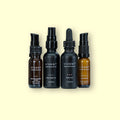
Products with Kojic Acid

  • GlyMed

    Brilliant Tone

    5.0 out of 5.0 stars

    $102.00

  • Vivant

    Derm-A-Gel

    4.0 out of 5.0 stars

    $86.00

  • Vivant

    Derm-A-Renew

    5.0 out of 5.0 stars

    $148.00

  • Vivant

    $90.00

  • Vivant

    $94.00

  • Vivant

    $304.00

  • Vivant

    Wink Eye Rejuvenation Cream

    5.0 out of 5.0 stars

    $94.00

More Ingredient Guides

View all

German chamomile flowers beside a slate blue dish holding drops of clear, pale golden oil on a warm stone surface.

Bisabolol for Calming Redness and Irritation

Bisabolol is the calming compound first found in chamomile, and it quiets the inflammation behind redness, stinging and itch. Here is how it works, who it suits and how to use it.
Read moreabout Bisabolol for Calming Redness and Irritation

Fresh comfrey leaves and purple flowers beside a slate blue dish of fine white allantoin powder on a warm stone surface.

Allantoin for Rough, Dry and Irritated Skin

Allantoin softens rough, flaky skin and soothes irritation, and the US FDA recognizes it as a skin protectant. Here is how it works, what the research shows and how to use it.
Read moreabout Allantoin for Rough, Dry and Irritated Skin

Fresh centella sprigs with small round scalloped leaves on a warm stone surface beside a slate blue ceramic dish, against a soft blush backdrop.

Centella for Redness and Reactive Skin

Centella calms inflammation, helps skin hold on to water and supports repair after irritation. Here is what the research shows, what cica means on a label and how to use it.

Read moreabout Centella for Redness and Reactive Skin