Your skin already makes squalane, or very nearly. Around a tenth of the oil your skin produces is a molecule called squalene, spelled with an e, and squalane is the stable version of it. That one letter is the whole story, and it decides whether an oil suits acne-prone skin or causes exactly the problem you were avoiding.

The short answer

Squalane is a lightweight oil almost identical to one your skin already produces. It sits between your surface cells and slows the water escaping through them, which makes skin softer and more comfortable within a day. Your own production falls with age, which is part of why skin gets drier. It suits every skin type including oily and acne-prone, and it layers with everything.

Diagram comparing squalene, which has gaps where oxygen gets in, with squalane, whose structure is closed and stays stable.
One letter, and the difference is whether oxygen can get in.

What it does

Squalane is a lightweight oil almost identical to one your skin already produces. It sits between your surface cells and slows the water escaping through them, which makes skin softer and more comfortable within a day. Your own production falls with age, which is part of why skin gets drier. It suits every skin type including oily and acne-prone, and it layers with everything.

Why skin needs oil as well as water

The outer layer of your skin works like a brick wall. Your surface cells are the bricks, and a mixture of fats fills the gaps between them like mortar. That mortar is what keeps water in and irritants out.

When the mortar is patchy, water escapes through the gaps all day. That is why skin can feel tight an hour after a hydrating serum. You added water to a container that leaks.

An emollient is an ingredient that fills those gaps. Squalane is one of the best of them, and the reason is that your skin recognizes it.

The one letter that changes everything

This is worth knowing, because it explains why squalane behaves so differently from most oils.

Your skin produces oil called sebum, and roughly a tenth to an eighth of it is a molecule called squalene, spelled with an e. Squalene is a natural part of your skin's own barrier.

The problem with squalene is that it is unstable. Its structure has gaps in it where oxygen can attack, so it oxidizes quickly when exposed to air. Oxidized squalene is a genuine problem rather than a theoretical one: it is more likely to block pores and it is irritating, and research into acne points at it as part of why sebum causes trouble on some faces.

Squalane, spelled with an a, is squalene with those gaps filled in. Chemically it has been saturated with hydrogen, which closes every point where oxygen could get in.

The result is a molecule your skin reads as its own, that does not go rancid in the bottle and does not oxidize on your face. That is the whole reason it suits acne-prone skin when the unsaturated version does not.

What it does once it is on

Squalane fills the gaps between your surface cells and slows water leaving through them. Skin feels softer immediately and looks less rough within a few days.

It is an emollient rather than a humectant, and the distinction matters for how you use it. A humectant such as hyaluronic acid draws water into your skin. Squalane does not bring water with it. It keeps the water already there from escaping, which is why it goes on after your hydrating serum rather than instead of it.

Your own squalene production falls with age, noticeably after your twenties, and that decline is part of why skin gets drier over time. Applying squalane topically tops up something your skin is making less of.

Where squalane comes from

This has changed, and it is worth knowing if you have avoided squalane in the past.

Squalane was originally made from shark liver oil, which is where sharks store squalene. It took many sharks to produce a small amount, and that is the history behind the ingredient.

The squalane in modern skincare is almost always plant-derived, made from olive oil residues or from sugarcane through fermentation. Both produce the same molecule. If the source matters to you, look for olive-derived or sugarcane-derived named on the packaging, which most brands now state.

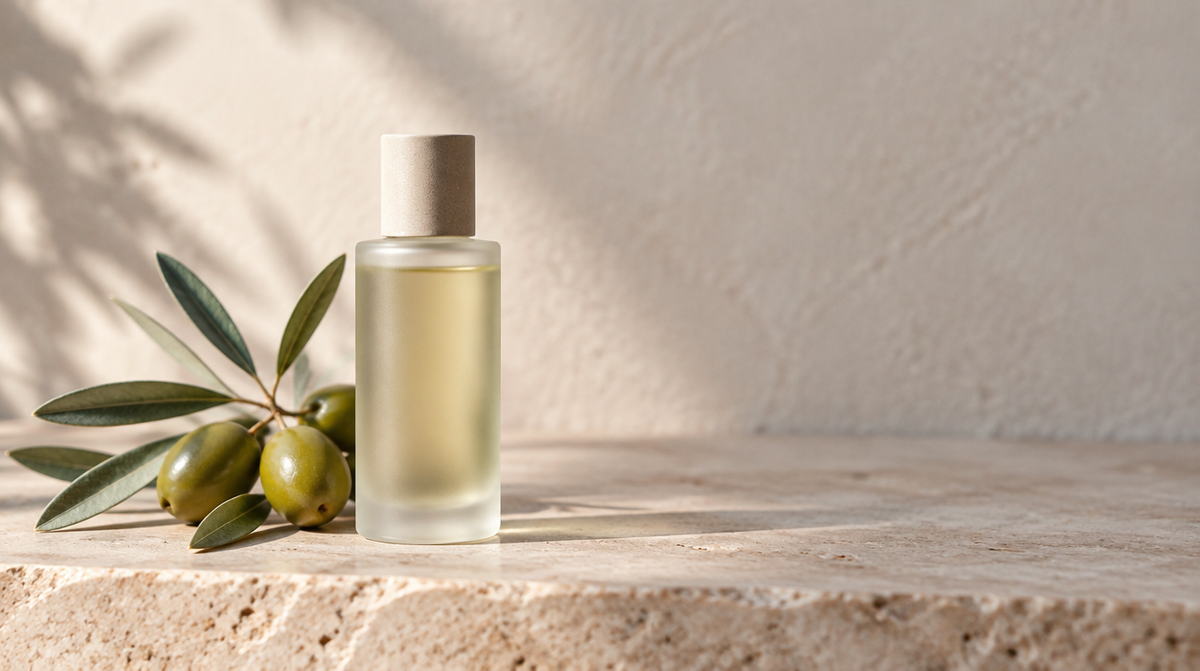
Diagram of a brick wall of skin cells showing water escaping through gaps without squalane and held in when the gaps are filled.
This is why skin can feel tight an hour after a hydrating serum. You added water to a container that leaks.

What to look for on a label

Check the spelling

Squalane with an a is the stable version and the one you want in a product. Squalene with an e is the unstable version. The two look almost identical on an ingredient list and behave quite differently on your face.

Most reputable products use squalane. It is worth a second look at the spelling if a product has ever broken you out unexpectedly.

Pure oil or part of a formula

Squalane is sold both ways, and both are legitimate.

A pure squalane oil is simple, inexpensive and useful as a final step, and it does one job. A moisturizer containing squalane alongside ceramides, hyaluronic acid or niacinamide is doing several at once, and for most people that is the better value.

If your skin is very reactive, a pure oil has the advantage of containing almost nothing to react to.

Where it sits in your routine

A pure squalane oil goes on last, after your moisturizer, because an oil is the thing nothing else gets through. If your squalane is in a moisturizer or a serum, use that product at its usual point in your routine.

What works best with squalane

Hyaluronic acid is the natural partner. It draws water in and squalane keeps it there, and that pairing solves the common complaint that a hydrating serum never quite lasts.

Ceramides are worth having alongside too, since they are the fats your barrier is specifically built from while squalane is the lighter layer sitting across the top.

It conflicts with nothing. It is especially worth having on the nights you use a retinoid or an exfoliating acid, when your barrier is under the most strain.

One thing to know about layering. An oil slows down whatever you put over it, so your actives go on first, on clean skin, and the squalane goes on afterwards.

Sunscreen every morning, reapplied through the day.

Common questions

Will an oil break me out?

Not necessarily, and squalane is one we suggest for acne-prone skin. Whether a product clogs pores depends on the whole formula rather than on one ingredient in it, because ingredients can make one another more or less likely to clog pores.

What makes squalane suited to skin that congests easily is how stable it is. Oils that have oxidized are more likely to cause problems, and squalane resists oxidation. How it was processed and how fresh it is still matter, as with any oil. If you clog easily, use a new squalane product on its own for four to six weeks to see how your skin responds.

Squalane or hyaluronic acid?

Both, and they do opposite halves of the same job. Hyaluronic acid brings water into your skin. Squalane stops that water leaving again.

If your skin is dehydrated, hyaluronic acid is what you need. If your skin is dry, meaning short of oil, squalane is what you are missing. It is common to be both, and in that case you want them together with hyaluronic acid first.

Is olive or sugarcane better?

Neither, for most purposes. Both produce the same molecule, and sugarcane-derived squalane is typically the more purified of the two, which is a point in its favour if your skin is very reactive.

Both are plant-derived, and both avoid the shark-derived sourcing this ingredient used to rely on.

How soon will I see something?

Softness and comfort the same day, because filling the gaps between your surface cells is immediate.

Skin that looks less rough and holds hydration better builds over two to four weeks, as your barrier gets a chance to recover rather than losing water all day.

Can I use it on freshly treated skin?

Yes, and it is one of the most useful ingredients for it. There is nothing in pure squalane to sting, and skin recovering from a peel or a laser is losing water faster than usual, which is exactly the problem an emollient solves.

Follow whatever aftercare your provider has given you.

Is it safe in pregnancy?

It is one of the easiest things to keep using when most actives come off the table, being a version of something your own skin produces. Check with your OB or midwife before starting anything new, as always.

Diagram showing squalane sourced from olive and sugarcane, with shark-derived sourcing marked as no longer used.
The squalane in modern skincare is almost always plant-derived. Most brands now state which.

How to use it

  • Morning and night, as often as you like. There is no irritation phase and nothing to build your tolerance up to with squalane.
  • A pure squalane oil goes on last, after your moisturizer. If your squalane is in a moisturizer or serum, use that product at its usual point in your routine.
  • Apply your hydrating serum first and the squalane over the top. Water goes in, and the oil keeps it there.
  • Three or four drops is plenty for a face. Squalane spreads a long way and more will only sit on the surface.
  • Press it in with your palms rather than rubbing, and apply to slightly damp skin for a better result.
  • Use it on the nights you use a retinoid or an exfoliating acid. Apply the active first, let it absorb, then the squalane over the top.
  • It is a good one to keep using on skin that is healing, including after in-clinic treatments, where there is nothing in it to sting.
  • Broad spectrum SPF 30 or higher every morning, reapplied through the day.
Evidence and sources
  • Final Report on the Safety Assessment of Squalane and Squalene. Journal of the American College of Toxicology. The safety and irritation data behind the claim that squalane is well tolerated. Read the assessment
  • Pappas A. Epidermal surface lipids. Covers squalene as a component of human sebum and the proportion it makes up.
  • Research into squalene peroxides and acne, which is where the distinction between the saturated and unsaturated forms comes from.

A note on the evidence. Squalane is an emollient rather than an active ingredient, so the literature behind it is about safety, tolerance and barrier function rather than clinical trials for a condition. The chemistry explaining why the saturated form resists oxidation is well established, and the work linking oxidized squalene to acne is a developing area rather than a settled one.

Products with Squalane

More Ingredient Guides

View all

German chamomile flowers beside a slate blue dish holding drops of clear, pale golden oil on a warm stone surface.

Bisabolol for Calming Redness and Irritation

Bisabolol is the calming compound first found in chamomile, and it quiets the inflammation behind redness, stinging and itch. Here is how it works, who it suits and how to use it.

Read moreabout Bisabolol for Calming Redness and Irritation

Fresh comfrey leaves and purple flowers beside a slate blue dish of fine white allantoin powder on a warm stone surface.

Allantoin for Rough, Dry and Irritated Skin

Allantoin softens rough, flaky skin and soothes irritation, and the US FDA recognizes it as a skin protectant. Here is how it works, what the research shows and how to use it.

Read moreabout Allantoin for Rough, Dry and Irritated Skin

Fresh centella sprigs with small round scalloped leaves on a warm stone surface beside a slate blue ceramic dish, against a soft blush backdrop.

Centella for Redness and Reactive Skin

Centella calms inflammation, helps skin hold on to water and supports repair after irritation. Here is what the research shows, what cica means on a label and how to use it.

Read moreabout Centella for Redness and Reactive Skin