5 min read

Lactic acid is unique among the exfoliating acids because it hydrates your skin while it exfoliates. You get the dead surface layer cleared and water drawn in at the same time, from one ingredient, which is why it suits almost everyone.

The short answer

Lactic acid dissolves the bonds holding dull, dead cells to your skin, and it is a humectant at the same time, which means it hydrates while it exfoliates. Skin looks brighter and feels smoother within a couple of weeks, tone evens out over a couple of months, and at higher strengths it works on firmness too. It suits every skin type and is the most comfortable of the exfoliating acids to use.

Suits Dry, Sensitive, Dehydrated, Normal, Mature, Combination
Read time 5 min
Diagram showing lactic acid doing three things at once: clearing dead cells, drawing water in and supporting the skin barrier.
Three things from one ingredient. Most exfoliants only do the first.

What it does

Lactic acid dissolves the bonds holding dull, dead cells to your skin, and it is a humectant at the same time, which means it hydrates while it exfoliates. Skin looks brighter and feels smoother within a couple of weeks, tone evens out over a couple of months, and at higher strengths it works on firmness too. It suits every skin type and is the most comfortable of the exfoliating acids to use.

What exfoliating actually does

Your skin replaces itself continuously. New cells form in the lower layers, travel upward over several weeks, and eventually die and flake away from the surface.

Those dead cells are held on by bonds that behave like glue. When shedding slows down, which happens with age and with dryness, the cells linger. They sit unevenly, scattering light instead of reflecting it, and that is what dullness and rough texture actually are.

An exfoliating acid dissolves that glue so the dull layer lifts away and fresher skin comes through. Within a couple of weeks your skin feels smoother and light starts reflecting off it evenly again.

What makes lactic acid different

Lactic acid is a humectant, which means it attracts water and holds onto it, the same way glycerin or hyaluronic acid does. It also encourages your skin to produce more of its own ceramides, which are the fats that stop that water escaping again.

So you are getting three things from one ingredient: the dead layer cleared, water drawn in, and your barrier supported to hold onto it.

That combination is why a well-made lactic product leaves skin soft rather than tight.

There is a reason for it, and it is worth knowing. Lactic acid is part of your skin's own natural moisturizing factor, the mixture of substances in your outer layer that holds water there. You are not applying something foreign, you are topping up something your skin already relies on.

Gradual, and that is the point

Lactic acid has a larger molecule than glycolic, which means it concentrates its work nearer the surface and gets there steadily rather than all at once.

That is a feature rather than a compromise. Exfoliation is cumulative, and the results come from using something consistently over months rather than from how hard any single application hits. An acid you can use twice a week for a year will always beat one that looked impressive for a couple of weeks and then had to be abandoned.

At the higher strengths used in professional peels, lactic acid does more than smooth the surface. There is decent evidence it stimulates collagen and thickens the living layer of skin. At home strengths, expect brightness and smoothness first, with structural change building slowly underneath.

Where lactic acid comes from

Lactic acid is what fermentation produces, which is why it turns up in sour milk, yogurt and sourdough. Cleopatra bathing in milk is the story everyone tells, and for once the folklore is pointing at something real.

What goes into skincare is produced by controlled fermentation rather than taken from milk, so most lactic acid on the market is vegan, and a formula contains a known amount.

Diagram comparing most exfoliants, where water escapes as dead cells lift away, with lactic acid, where water moves into the skin and stays held.
Most exfoliants take something away and leave your skin to manage. Lactic acid gives hydration back while it works.

What to look for on a label

Five to ten percent at home

Five percent is a comfortable starting point and ten percent is a reasonable place to settle. Stronger concentrations belong in a treatment room, where the acid is neutralized at a controlled point rather than left on overnight.

Stay where you are as long as your skin is still improving. The people who get the best results long term are the ones using a moderate strength consistently.

pH matters as much as percentage

An acid only exfoliates in its acidic form, and how much of it is in that form depends on the pH of the formula. A ten percent lactic acid at pH 3.5 does noticeably more than the same percentage at pH 5. You will rarely be told the pH, which is why the number on the front tells you less than people assume, and why a carefully built product often outperforms a blunt one.

Format changes everything

A lactic acid cleanser is on your skin for thirty seconds. A toner or pad sits longer. A serum or overnight cream works for hours and does the most. Two products at the same percentage behave completely differently for this reason alone, so read the format before you judge the strength.

What it pairs with

Lactic acid and a retinoid work well together, and several well-made products combine them in one formula where the strengths have been balanced deliberately. If your product is not built that way, keep the two on separate nights rather than doing that balancing yourself.

It pairs naturally with hydrating ingredients, which suits what it is already doing. Hyaluronic acid, ceramides and niacinamide all sit comfortably alongside it, and pigment ingredients like arbutin and kojic acid benefit from the faster turnover.

Sunscreen every morning, reapplied through the day.

Common questions

Does it really hydrate, or is that marketing?

It genuinely does. Lactic acid is a humectant and part of your skin's own natural moisturizing factor, and it encourages ceramide production as well. Hydrating while exfoliating is what makes it unique.

How soon will I see something?

Brightness and smoothness within two to three weeks. Tone evens out over a couple of months, and firmness takes longer still.

Photograph your skin on day one and every four weeks after, in natural daylight from the same spot, since texture changes are hard to judge day to day.

Lactic or glycolic?

Choose by your skin rather than by ambition. Lactic acid hydrates while it exfoliates and is the more comfortable of the two on skin that irritates easily, which makes it the better everyday choice for a lot of people.

Glycolic has a smaller molecule and travels further into the skin, so it works faster on texture and fine lines if your skin takes it well. Both are excellent at what they do.

Plenty of people use lactic in winter and glycolic in summer, which works well.

Does it make me sun sensitive?

Yes, as all exfoliating acids do, and the effect lasts about a week after you stop. Removing the dull top layer leaves fresher skin exposed, which is why daily sunscreen is part of using it rather than an optional extra.

Can I use it on deeper skin tones?

Yes, and lactic acid works well. Deeper skin pigments much easier, and since irritation itself can trigger excess pigment, an acid less likely to leave skin red is the safer route.

Mandelic acid is worth knowing about here too. It has the largest molecule of the three and enters the skin the most slowly, which makes it gentler than lactic acid, and it works on excess pigment directly as well as exfoliating. That tends to make it our first suggestion when someone with deeper skin is working on dark marks and texture at the same time.

Is it safe in pregnancy?

Lactic acid is generally considered one of the acceptable options during pregnancy and is a common recommendation once retinoids come off the table. Check with your OB or midwife before starting anything new.

Chart comparing a gentle acid used consistently for a year against a strong one abandoned early, showing the gentle route ends further ahead.
An acid you can use twice a week for a year will always beat one that looked impressive for a fortnight.

How to use it

  • How often depends on the strength of your product, so follow what the manufacturer recommends. If you are not sure, twice a week is a safe place to start and you can build from there.
  • Most people settle at two or three times a week. A lactic acid cleanser can be used more often than a leave-on product, because it rinses off within a minute.
  • Apply your serum or treatment to clean, dry skin.
  • Night is the usual choice, though lactic acid can be used in the morning too as long as you are wearing sunscreen.
  • Keep lactic acid and your retinoid on separate nights, unless your product is formulated as a two in one.
  • Follow with a hydrating serum and moisturizer. Lactic acid brings water in, and a moisturizer is what keeps it there.
  • Broad spectrum SPF 30 or higher every morning, reapplied through the day, whether or not you used your acid the night before.
  • Stop using it for four to seven days before waxing, threading, laser or an in-clinic treatment, and leave it another four to seven days afterwards before starting again. Ask whoever is doing the treatment, as it varies with what you are having done.
  • Photograph your skin on day one, then every four weeks in natural daylight from the same spot.
Evidence and sources

A note on the evidence. Lactic acid is one of the better studied cosmetic ingredients, with decades of work behind it on exfoliation, hydration and its use in professional peels, and its role in the skin's own natural moisturizing factor is well established. The collagen findings come mainly from studies using the higher strengths applied in a clinical setting, so it is fair to expect a more modest version of that from a product you use at home. As with all the exfoliating acids, pH and formulation affect the outcome as much as percentage does, and most products do not disclose their pH.

Last reviewed

Products with Lactic Acid (AHA)

  • SkinBetter Science

    A-Team Duo Kit

    5.0 out of 5.0 stars

    $185.00

  • GlyMed

    Accelerator Gel

    5.0 out of 5.0 stars

    $76.50

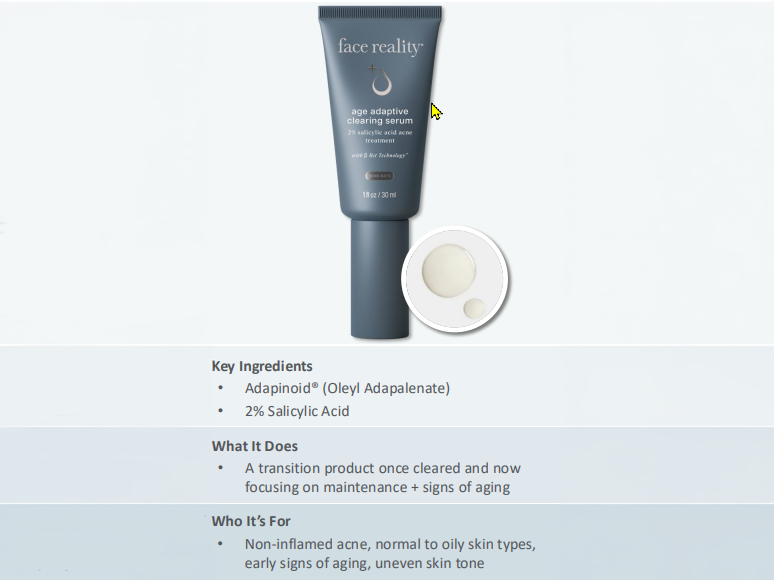
  • Face Reality

    Age Adaptive Clearing Serum

    4.5 out of 5.0 stars

    $76.00

  • SkinBetter Science

    AlphaRet Body Overnight Cream

    5.0 out of 5.0 stars

    From $40.00

  • SkinBetter Science

    AlphaRet Clearing Serum

    4.8 out of 5.0 stars

    From $145.00

  • SkinBetter Science

    AlphaRet Exfoliating Peel Pads

    5.0 out of 5.0 stars

    $130.00

  • SkinBetter Science

    AlphaRet Overnight Cream

    5.0 out of 5.0 stars

    From $76.00

  • GlyMed

    Anti-Aging Exfoliant Masque

    5.0 out of 5.0 stars

    $51.50

  • Hale & Hush

    Clarify Wash

    5.0 out of 5.0 stars

    From $26.00

  • Vivant

    $86.00

  • Vivant

    $220.00

  • Vivant

    Derm-A-Gel

    4.0 out of 5.0 stars

    $86.00 Sold out

  • Vivant

    Derm-A-Renew

    5.0 out of 5.0 stars

    $148.00

  • Environ

    $84.00

  • SkinBetter Science

    Detoxifying Scrub Mask

    4.8 out of 5.0 stars

    $65.00

  • GlyMed

    Diamond Bright Skin Illuminator

    5.0 out of 5.0 stars

    $82.00

  • SkinBetter Science

    From $70.00

  • Vivant

    $90.00

  • Vivant

    $94.00

  • SkinBetter Science

    EyeMax AlphaRet Overnight Cream

    4.8 out of 5.0 stars

    $135.00

  • Vivant

    $294.00

  • Face Reality

    Glycolic-Lactic Toner

    4.8 out of 5.0 stars

    $33.00

More Ingredient Guides

View all

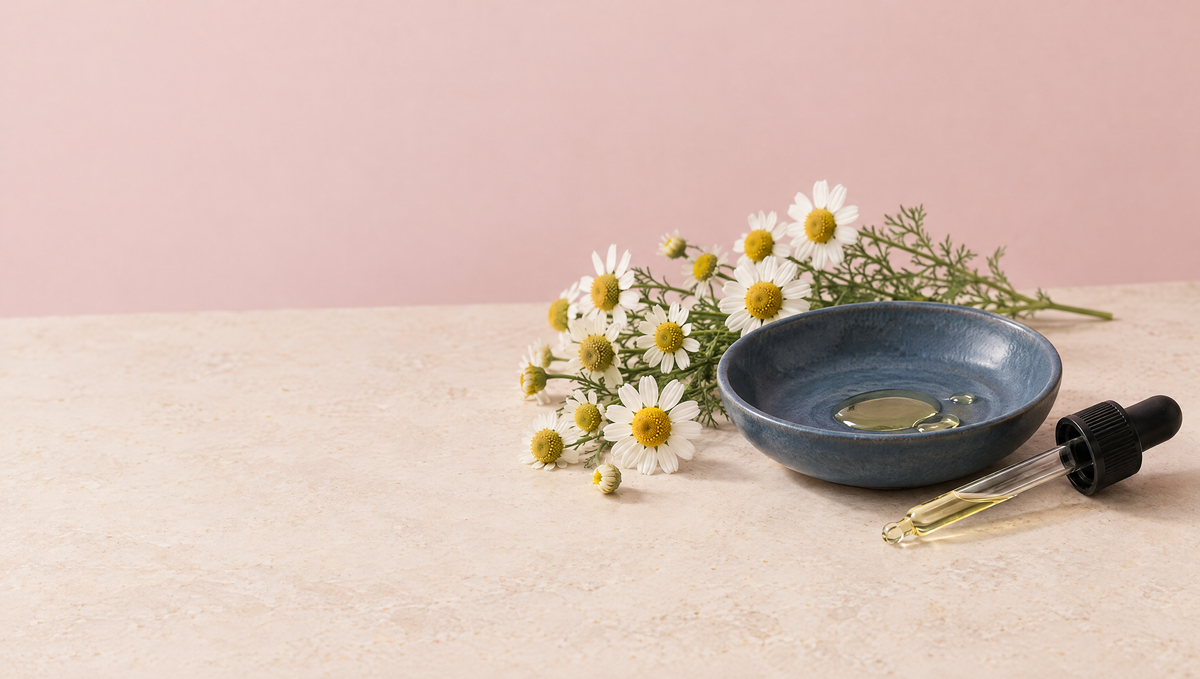
German chamomile flowers beside a slate blue dish holding drops of clear, pale golden oil on a warm stone surface.

Bisabolol for Calming Redness and Irritation

Bisabolol is the calming compound first found in chamomile, and it quiets the inflammation behind redness, stinging and itch. Here is how it works, who it suits and how to use it.
Read moreabout Bisabolol for Calming Redness and Irritation

Fresh comfrey leaves and purple flowers beside a slate blue dish of fine white allantoin powder on a warm stone surface.

Allantoin for Rough, Dry and Irritated Skin

Allantoin softens rough, flaky skin and soothes irritation, and the US FDA recognizes it as a skin protectant. Here is how it works, what the research shows and how to use it.
Read moreabout Allantoin for Rough, Dry and Irritated Skin

Fresh centella sprigs with small round scalloped leaves on a warm stone surface beside a slate blue ceramic dish, against a soft blush backdrop.

Centella for Redness and Reactive Skin

Centella calms inflammation, helps skin hold on to water and supports repair after irritation. Here is what the research shows, what cica means on a label and how to use it.

Read moreabout Centella for Redness and Reactive Skin