5 min read

A blackhead is not dirt, and it is not a pore that needs squeezing. It is a plug of dead cells bound together with oil, sitting inside the pore. Because it is attracted to oil, salicylic acid is uniquely capable of penetrating deep inside the pore to break apart the oil and dead skin plug from within.

The short answer

Salicylic acid dissolves in oil, so it travels down into a pore and breaks up the plug of dead cells and sebum sitting inside it. It also calms inflammation, which takes the redness out of a breakout. Blackheads and congestion improve within four to six weeks, and it is the most useful acid there is for oily, congested skin.

Suits Oily, Combination, Acne-prone, Normal
Read time 5 min
Diagram comparing a water-soluble acid that stays on the surface around a pore with an oil-soluble acid that travels down inside and breaks the plug apart.
A pore is full of oil, and a water-loving acid cannot get into it. Salicylic acid is at home there.

What it does

Salicylic acid dissolves in oil, so it travels down into a pore and breaks up the plug of dead cells and sebum sitting inside it. It also calms inflammation, which takes the redness out of a breakout. Blackheads and congestion improve within four to six weeks, and it is the most useful acid there is for oily, congested skin.

What a blackhead actually is

Your pores produce oil and shed dead skin cells continuously. When those two build up inside a pore faster than they clear, they form a plug.

If the pore is open at the top, the surface of that plug darkens where it meets the air, and you see a blackhead. If the pore is closed over, you get one of those small bumps that never comes to a head. Same thing, different opening.

It is not dirt, which is why washing your face harder does nothing, and it is not something to squeeze out, because the pore simply refills.

Why most acids cannot reach it

Here is the property that makes salicylic acid different from every other exfoliating acid: it dissolves in oil.

Glycolic, lactic and mandelic acid dissolve in water, so they work across the surface of your skin. A pore, though, is full of oil, and a water-loving acid cannot get into it. That is why those acids smooth texture beautifully and do very little for a blackhead.

Salicylic acid is at home in oil, so it travels down into the pore and reaches the whole of that plug rather than just the exposed tip. It breaks the bonds holding the plug together, and the pore can empty itself.

That is also why it prevents as much as it clears. A pore being kept free of that build-up does not become a blackhead, and does not become the blocked pore a breakout starts from. Most of the value here is in what never forms.

The anti-inflammatory half

Salicylic acid is chemically related to aspirin, and it brings some of that character with it. Used regularly across an area, breakouts come up less red and settle down faster than they otherwise would.

That matters more than it sounds. The brown marks left behind after a breakout are caused by the inflammation rather than by the spot itself, so less inflammation means fewer marks to fade later. You are preventing the shadow at the same time as the spot.

Where salicylic acid comes from

It comes from willow bark, and it has a longer medical history than almost any other skincare ingredient. The same chemistry gave us aspirin.

What goes into skincare is made in a lab. You will sometimes see willow bark extract on a label instead, which contains the precursor rather than salicylic acid itself and is a good deal gentler and less predictable. If you want the effect described here, look for salicylic acid by name.

Diagram distinguishing purging, which appears where you normally congest and can take three to six months to settle, from irritation, which appears in new areas.
Purging shows up where you already congest. Breakouts somewhere new are irritation instead.

What to look for on a label

Half a percent to two percent

Two percent is the highest concentration the FDA permits in an over-the-counter acne product you leave on the skin, so it is a regulatory ceiling rather than a marketing one. Most serums and toners sit right at it.

Half a percent to one percent is plenty in a cleanser or for sensitive skin. Two percent is the effective dose rather than the first rung on a ladder, and there is nothing above it worth seeking out.

Format decides what it does

This matters more with salicylic acid than with most ingredients. A cleanser does a weaker version of what a leave-on product does, because it is rinsed off within a minute and has limited time to get down into a pore. A toner or serum stays put and does considerably more.

Which you need depends on how much congestion you have. For mild clogging, a good salicylic cleanser used daily is often all it takes, and plenty of people never need more than that. For moderate to severe congestion or active acne, a leave-on product is what will actually shift it, and the cleanser becomes support alongside it.

What is alongside it

Salicylic acid can be drying, so the better formulas buffer it. Niacinamide, hyaluronic acid, panthenol or ceramides alongside it keep your barrier comfortable while it clears your pores, and that is worth looking for rather than dismissing as filler.

Where it sits in your routine

A salicylic serum or toner goes on clean, dry skin before your moisturizer. If yours is a cleanser, use it at the cleansing step as you normally would.

What works best with salicylic acid

Niacinamide is the natural partner, since it regulates oil and calms redness while salicylic acid clears the pore. Benzoyl peroxide works well alongside for inflamed acne, as the two do different jobs. If you are also working on the marks breakouts have left, a pigment ingredient such as kojic acid, arbutin or azelaic acid handles that side while the salicylic acid works on the pores.

Keep it on separate nights from your retinoid unless the product is formulated as a two in one. Alternatively, use your salicylic acid in the morning and your retinoid at night, which suits people who would rather not skip nights.

Sunscreen every morning, reapplied through the day. Here is the trade-off worth understanding: clear the breakout and you are left with a flat brown mark where it was, and sun exposure makes that mark darker and far slower to fade. Without sunscreen you swap a spot that would have healed in a week for a mark that hangs around for months.

Common questions

Why am I breaking out more since I started?

That is purging, and it means the salicylic acid is working. Faster clearing brings congestion that was already forming up to the surface sooner than it would have arrived on its own.

Be prepared for this to take longer than you expect. There is roughly ninety days of congestion already sitting in your skin at any time, which means purging can run for three to six months before it finishes.

The way to tell purging from irritation is where it appears. Purging shows up where you normally congest. Breakouts somewhere new, or redness and stinging across your whole face, is irritation, and that means using it less often.

Salicylic or glycolic?

It depends on what you are working on. Salicylic acid dissolves in oil, so it gets inside pores and clears congestion. Glycolic acid works across the surface and travels into the living layer, which makes it the one for texture, tone and fine lines.

Both are excellent at what they do. Congestion points to salicylic, dullness and lines point to glycolic, and plenty of people use one on each part of their face.

How soon will I see something?

Blackheads and congestion improve within four to six weeks, and oiliness often settles sooner than that.

Photograph your skin on day one and every four weeks after, in natural daylight from the same spot.

Will it get rid of my blackheads for good?

It will clear them and keep them clear while you use it. Your pores carry on producing oil and shedding cells, so if you stop, they refill over a few months.

This is an ingredient you keep in your routine rather than one you finish a course of.

Can I use it on my body?

Yes, and it works well on chest, back and the backs of the arms. Body skin is thicker and tolerates more, which is why body products often use higher concentrations than you would put on your face.

Is it safe in pregnancy or while breastfeeding?

Yes, at a low strength. Salicylic acid at around 0.5 to 1 percent is often considered acceptable during pregnancy and while breastfeeding, although not every doctor agrees. Skincare ingredients are almost never tested on pregnant people.

Speak to your OB, midwife or doctor before you start, and follow what they say. If you would rather use something else for those months, azelaic acid has the most reassuring track record for congestion and breakouts.

Diagram showing salicylic acid applied only to the congested central zone while dry areas are left alone.
There is no reason to dry out cheeks that were never the problem.

How to use it

  • Start three times a week with a leave-on product and build to nightly if your skin is comfortable. A cleanser can be used daily from the start.
  • Apply it across the whole area that congests rather than onto individual blackheads. The pores you cannot see yet are already filling.
  • If only part of your face congests, use it only there. There is no reason to dry out cheeks that were never the problem.
  • Follow with a hydrating serum and moisturizer. Clear pores and a comfortable barrier are not in conflict.
  • Keep it on separate nights from your retinoid, or use the salicylic acid in the morning and your retinoid at night.
  • Broad spectrum SPF 30 or higher every morning, reapplied through the day.
  • Stop using it for four to seven days before waxing, threading, laser or an in-clinic treatment, and leave it another four to seven days afterwards before starting again. Ask whoever is doing the treatment, as it varies with what you are having done.
  • Photograph your skin on day one, then every four weeks in the same spot and light.
Evidence and sources

A note on the evidence. Salicylic acid is one of the best-established ingredients in dermatology, with a long clinical history in acne treatment and a mechanism that is thoroughly understood. Its oil solubility and its ability to break down the plug inside a pore are not in question, and the two percent limit in leave-on products is set by regulators rather than by marketing. The anti-inflammatory effect follows from its chemical relationship to aspirin and is well documented. This is settled ground compared with much of what we have written about in this series.

Last reviewed

Products with Salicylic Acid (BHA)

  • GlyMed

    Skin Resurfacing Lotion

    5.0 out of 5.0 stars

    $36.00

  • SkinBetter Science

    Solo Hydrating Defense MEN

    5.0 out of 5.0 stars

    $180.00

More Ingredient Guides

View all

German chamomile flowers beside a slate blue dish holding drops of clear, pale golden oil on a warm stone surface.

Bisabolol for Calming Redness and Irritation

Bisabolol is the calming compound first found in chamomile, and it quiets the inflammation behind redness, stinging and itch. Here is how it works, who it suits and how to use it.

Read moreabout Bisabolol for Calming Redness and Irritation

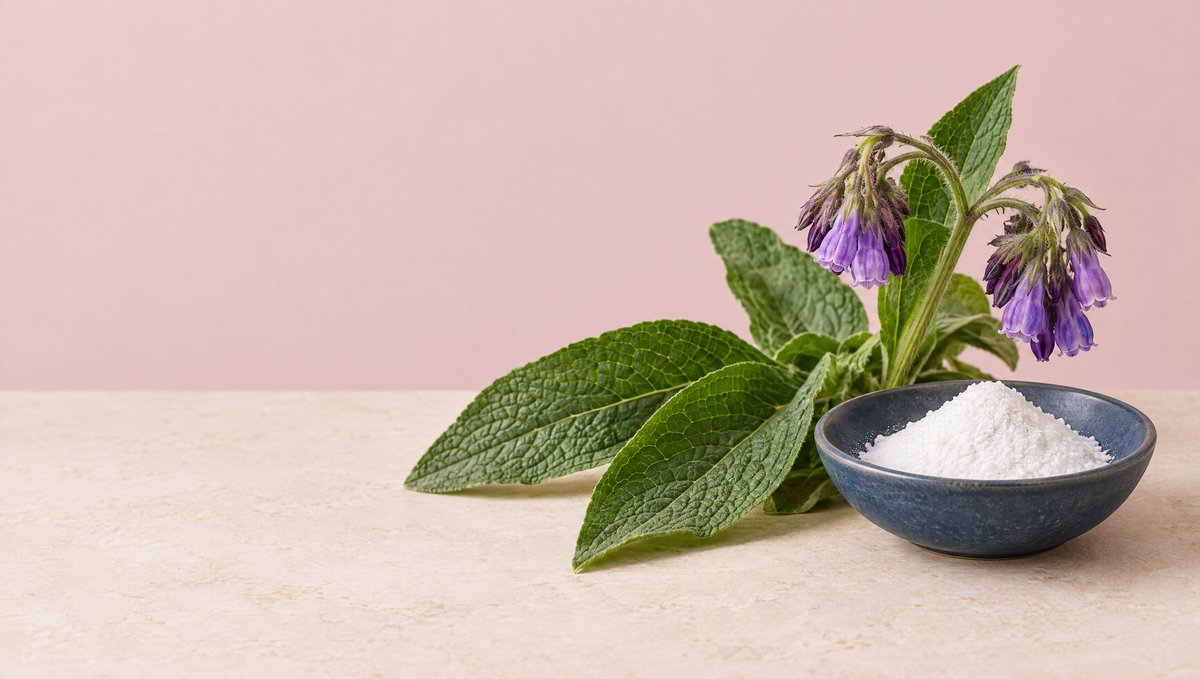
Fresh comfrey leaves and purple flowers beside a slate blue dish of fine white allantoin powder on a warm stone surface.

Allantoin for Rough, Dry and Irritated Skin

Allantoin softens rough, flaky skin and soothes irritation, and the US FDA recognizes it as a skin protectant. Here is how it works, what the research shows and how to use it.

Read moreabout Allantoin for Rough, Dry and Irritated Skin

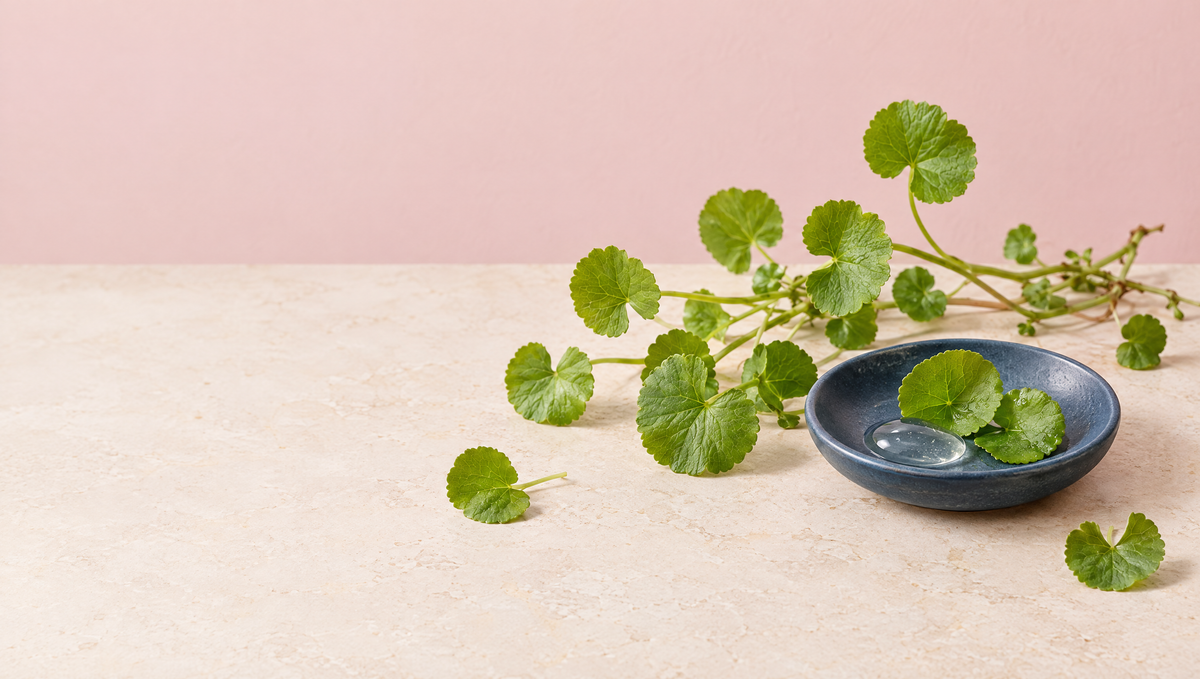
Fresh centella sprigs with small round scalloped leaves on a warm stone surface beside a slate blue ceramic dish, against a soft blush backdrop.

Centella for Redness and Reactive Skin

Centella calms inflammation, helps skin hold on to water and supports repair after irritation. Here is what the research shows, what cica means on a label and how to use it.

Read moreabout Centella for Redness and Reactive Skin