9 min read

Most of the result from a peel, laser or microneedling comes from your skin healing itself in the days and weeks afterward. What you put on your skin in that window can support that healing or get in its way, and good aftercare is mostly knowing what to leave alone.

The short answer

After a procedure, your skin is repairing a controlled injury that was made on purpose, and that repair is what produces the result. Caring for it means following your provider's aftercare, using only soothing products and nothing anti-inflammatory for the first 48 hours after microneedling, and keeping your routine gentle and hydrating while it heals. Protect it from the sun with a mineral sunscreen, and bring your usual products back in stages.

Read time 9 min
Suits All skin types, Sensitive

What a procedure does to your skin

Peels, lasers and microneedling all work by creating a controlled injury. A peel removes layers of skin with acid, a laser heats or removes skin with light, and microneedling makes many tiny channels with fine needles. Each one is designed to be small enough to heal well and large enough to prompt your skin to rebuild.

Your skin then heals in stages. First comes inflammation, which brings redness, warmth and some swelling. During this stage, platelets and immune cells release growth factors, the signals that tell skin cells to multiply and tell fibroblasts, the cells that make collagen, to make more of it. Over the following weeks and months, new collagen is laid down and slowly reorganized, which is why results keep improving long after the procedure.

Why we do not reduce inflammation after microneedling

The inflammation after microneedling is part of how the procedure works, because it is what produces the growth factors that build new collagen. At LAZ Skincare, we do not use anything anti-inflammatory in the first 48 hours, and we do not apply exosomes or peptide serums during that window. Applying them straight after microneedling has become popular, and it works against the response the procedure relies on. Soothing is different from reducing inflammation, and we do apply soothing masks in the clinic to calm how your skin feels.

There is a second reason. The tiny channels stay open for a short time, and anything applied then can travel far deeper than it is designed to go. It is the whole formula that goes deep, not only the active ingredient, and most ingredients are designed for a specific layer of skin. Going deeper than that is where irritation comes from. A published report described three people who developed firm, inflamed lumps on the face, called granulomas, after products were applied to their skin as part of microneedling.

If your provider gives you a specific product for that window, follow their aftercare, since they know what was done and what that product is made for.

Peels and lasers are different

Peels and lasers vary much more. A light peel may leave skin slightly pink for a day, while a deep peel or a resurfacing laser can mean a week or more of redness and peeling. Because of that range, aftercare for peels and lasers is decided case by case, depending on what was done and how your skin responded.

What normal healing looks like

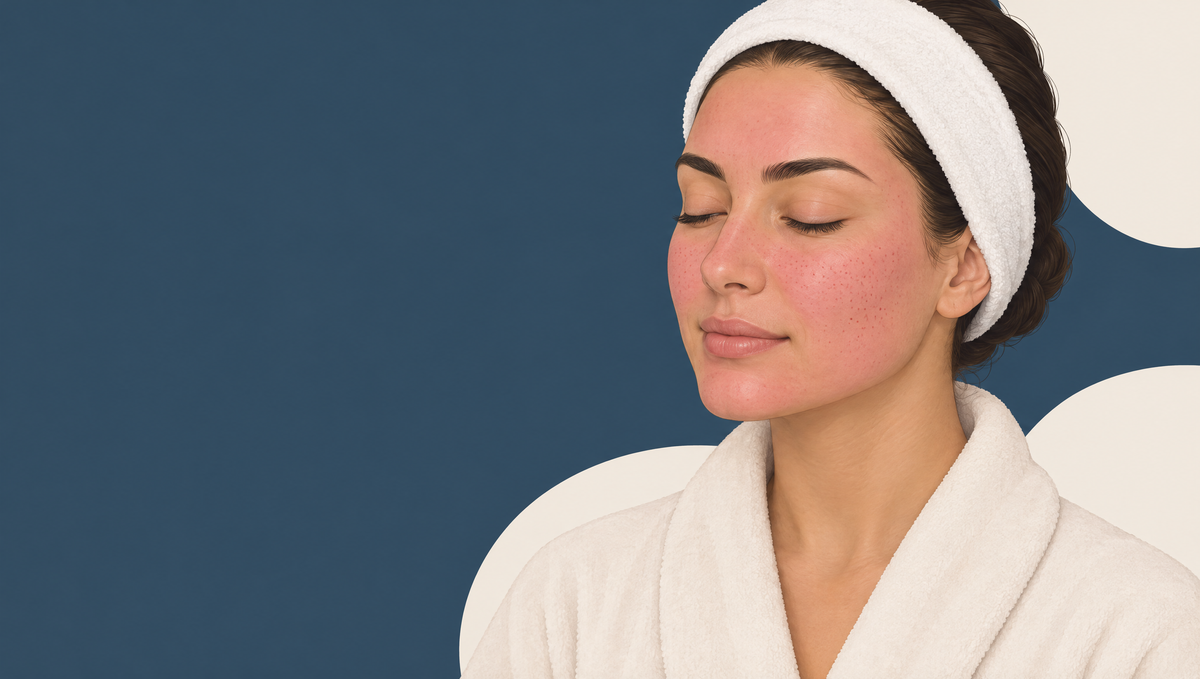
Redness, warmth, tightness and a feeling like mild sunburn are expected for the first one to three days after microneedling or a light peel, and for longer after a deeper peel or laser. Light flaking or peeling often follows as new skin comes through. The signs that are not part of normal healing are listed in the Good to know section below.

Three-panel diagram of skin after microneedling: tiny channels, then inflammation releasing growth factors, then a mesh of new collagen fibers.
The redness after microneedling releases the growth factors that build new collagen, which is why we leave it alone for 48 hours.

How to care for skin after a procedure

Follow your provider's aftercare first

Your provider's instructions are written for the procedure you had and the skin they saw. If anything below differs from them, follow theirs. If you are a client at our New York City LAZ Clinic, ask us and we will tell you exactly when to start each product.

Keep it simple while your skin heals

Once your provider says you can use products, keep to a gentle cleanser, a moisturizer and a mineral sunscreen. Cleanse with lukewarm water and your fingertips, and pat your skin dry. Skip scrubs and cleansing brushes until your skin has healed. Skip saunas, swimming pools and hard workouts for the first two days, since heat, sweat and chlorine can irritate healing skin.

Hydrate and support repair

When your skin is ready for more than the basics, ingredients that hydrate and support your barrier help it through the tight, flaky stage. These are the ones we use most after procedures, and each has its own article in the Ingredients that help section below.

Sodium hyaluronate and hyaluronic acid hold water in your skin, which eases tightness. Sodium hyaluronate also supports wound healing, which makes it welcome on skin that is recovering.

Panthenol is vitamin B5. It hydrates, calms irritation and gives your skin material to repair itself with.

Ceramides, cholesterol and fatty acids are the fats that hold your barrier together. Replacing all three, in balance, keeps water in while new skin forms.

Ectoin holds water steady around your skin cells and helps skin cope with heat and dryness while it recovers.

Hypochlorous acid is one of the few things we can send someone home with after a peel or a laser that will not sting. We suggest it for occasional use rather than every day, because it reduces every kind of bacteria on your skin at once, and your skin relies on that population staying in balance.

Protect it from the sun

New skin is thinner and pigments more easily for the first few weeks. Stay out of direct sun as much as you can and wear a wide-brimmed hat. Once your provider says you can use products, wear a mineral sunscreen with zinc oxide every morning and reapply it throughout the day. Mineral filters settle into the topmost layer of skin and stay there, which is why they are usually more comfortable on healing skin.

Bring products back in stages

Bring your usual products back in order of how gentle they are. Moisturizer and sunscreen come first, then hydrating serums, then vitamin C and niacinamide, and last of all exfoliating acids and retinoids. Add one product at a time, and wait until your skin is comfortable, with no stinging, before adding the next.

Prepare for your next procedure

The weeks before a procedure matter too. Using exosomes before a procedure helps prepare your skin, and a carboxy mask beforehand gets skin into better condition going in, which amplifies the result. Pause exfoliating acids and retinoids beforehand for as long as your provider advises.

Diagram of four rising steps labeled basics, hydration, antioxidants and actives, showing the order to bring products back.
Moisturizer and sunscreen return first, and exfoliating acids and retinoids return last, one product at a time.

Common questions

When can I go back to my usual routine?

It depends on the procedure. After microneedling, most people are back to gentle products after 48 hours and to their full routine after about five to seven days. After a light peel, it is often three to seven days. After a deeper peel or a resurfacing laser, it can be two weeks or more, and your provider will tell you when.

Days three to five are where people tend to give up on waiting, because skin is flaking and it is tempting to scrub it away or bring an exfoliant back early. Let the flakes shed on their own. Starting strong products too soon is the most common way healing skin gets irritated.

Should I calm the redness after microneedling?

You can soothe it, but do not reduce inflammation in the first 48 hours. Redness is not always a sign of inflammation, and something soothing can make your skin feel calmer. What we avoid is anything anti-inflammatory, because the inflammation produces the growth factors your skin uses to build new collagen. If the redness is getting worse after two days rather than better, see a doctor and let your provider know.

Can I wear makeup after a procedure?

No, not straight away. Wait until your provider says you can, which is usually at least 48 hours after microneedling and longer after deeper peels and lasers, because makeup on healing skin can travel deeper and irritate it.

Is aftercare different for deeper skin tones?

Yes, in one important way. Deeper skin pigments much easier, and healing skin is inflamed skin, which means sun, heat, picking and starting strong products too soon can leave dark marks behind. Gentle care and steady sun protection for the first four to six weeks protect against that.

Can I have procedures during pregnancy?

It depends on the procedure. Speak to your provider and your OB or midwife first, since many providers postpone some procedures until after pregnancy. The aftercare ingredients above, such as hyaluronic acid, panthenol and ceramides, are commonly used during pregnancy.

How to use it

  • Follow your provider's aftercare first, and ask them before adding anything that is not on it.
  • After microneedling, use only soothing products for the first 48 hours, and nothing anti-inflammatory, unless your provider has given you a specific product for that window.
  • Cleanse with lukewarm water and your fingertips, and pat your skin dry.
  • Keep to a gentle cleanser, a moisturizer and a mineral sunscreen until your skin is comfortable.
  • Stay out of direct sun, and once products are allowed, wear a mineral sunscreen every morning and reapply it throughout the day.
  • Bring products back one at a time, from the gentlest to the strongest.
  • Photograph your skin on day one, in the same spot and in natural daylight, and again every four weeks.
Start with the basics Skincare 101: Know Your Skin, Build Your Basics
Evidence and sources
  • Zettersten EM, Ghadially R, Feingold KR, Crumrine D, Elias PM. Optimal ratios of topical stratum corneum lipids improve barrier recovery in chronologically aged skin. Journal of the American Academy of Dermatology, 1997. How the balance of ceramides, cholesterol and fatty acids applied to the skin changes how quickly the barrier recovers. Read the study
  • Singh A, Yadav S. Microneedling: Advances and widening horizons. Indian Dermatology Online Journal, 2016. How microneedling works through the skin's own healing response, and its use on deeper skin tones. Read the review
  • Soltani-Arabshahi R, Wong JW, Duffy KL, Powell DL. Facial Allergic Granulomatous Reaction and Systemic Hypersensitivity Associated With Microneedle Therapy for Skin Rejuvenation. JAMA Dermatology, 2014. The report of three people who developed granulomas after products were applied as part of microneedling. Read the report
  • Davis EC, Callender VD. Postinflammatory Hyperpigmentation: A Review of the Epidemiology, Clinical Features, and Treatment Options in Skin of Color. The Journal of Clinical and Aesthetic Dermatology, 2010. Why procedures can leave dark marks on deeper skin tones, and why sun protection afterward matters. Read the review

A note on the evidence. How skin heals after an injury is well understood. Research on aftercare itself is thin, and most aftercare guidance comes from clinical experience rather than trials. The granuloma report describes three people, which shows that the risk exists rather than how often it happens. What we describe here combines that research with what we see in the clinic.

Last reviewed

Ingredients that help

What each one does, how it works and how to use it.

Products for Post-Procedure

  • Alastin

    Gentle Cleanser

    5.0 out of 5.0 stars

    From $20.00

  • Revision

    $109.00

  • Alastin

    HA Immerse Serum

    5.0 out of 5.0 stars

    $134.00

  • Hale & Hush

    Hush Hydrate Gel

    5.0 out of 5.0 stars

    $40.00

  • Hale & Hush

    $98.00

  • Epicutis

    Hydrobiome Mist

    4.8 out of 5.0 stars

    $75.00

  • Epicutis

    Hyvia Creme

    4.9 out of 5.0 stars

    $195.00

  • Plated

    Intense Serum

    4.9 out of 5.0 stars

    From $244.00

  • KrX Aesthetics

    Jelly Mist Spray on Gel Mask

    5.0 out of 5.0 stars

    $45.00

  • Young Goose

    $196.50

  • Epicutis

    Lipid Body Treatment

    5.0 out of 5.0 stars

    From $74.00

  • Epicutis

    Lipid Recovery Mask

    5.0 out of 5.0 stars

    From $105.00

  • Epicutis

    Lipid Serum

    5.0 out of 5.0 stars

    $250.00

  • Epicutis

    Lipid Shield SPF 30

    4.9 out of 5.0 stars

    $90.00

  • Biojuve

    Living Biome Essentials Serum Duo

    4.9 out of 5.0 stars

    $220.00

  • Epicutis

    Luxury Skincare Set

    5.0 out of 5.0 stars

    $395.00

  • Epicutis

    $175.00

  • Vivant

    Marine Skin Nourishment Cream

    5.0 out of 5.0 stars

    $48.00

  • Marini SkinSolutions

    $185.00

  • Hale & Hush

    $36.00

  • Calecim

    Multi-Action Cream

    5.0 out of 5.0 stars

    $200.00

  • SkinBetter Science

    Mystro Active Balance Serum

    4.8 out of 5.0 stars

    From $115.00

More Skin Concern Guides

View all

Illustration of a young woman with fair skin, with small dark blackheads across her nose and tiny pale whiteheads on her forehead.
  • by Laziza Strait

Blackheads and Whiteheads: What Clogs a Pore and How to Clear It

Blackheads and whiteheads are clogged pores that have not turned red or sore. Here is what forms the plug, why many nose blackheads are something else, and how to clear them.

Read moreabout Blackheads and Whiteheads: What Clogs a Pore and How to Clear It
Close illustration of the eyes of a South Asian woman with medium-brown skin, with darker brown-purple shadows beneath both eyes.
  • by Laziza Strait

Dark Circles: What Causes Them and What Skincare Can Change

Dark circles come from extra pigment, blood vessels showing through thin skin, or shadow from a hollow under the eye. Here is how to tell which you have and what skincare can change.

Read moreabout Dark Circles: What Causes Them and What Skincare Can Change
Illustration of an East Asian woman in her late fifties with fine crisscross lines on her cheek, beside a magnified circle showing stiff, tangled collagen fibres.
  • by Laziza Strait

Glycation: How Sugar Stiffens Skin and What Can Slow It

Glycation is sugar bonding to the collagen in your skin, leaving it stiffer and more yellow over the years. Here is how it happens, what speeds it up and what can slow it down.

Read moreabout Glycation: How Sugar Stiffens Skin and What Can Slow It